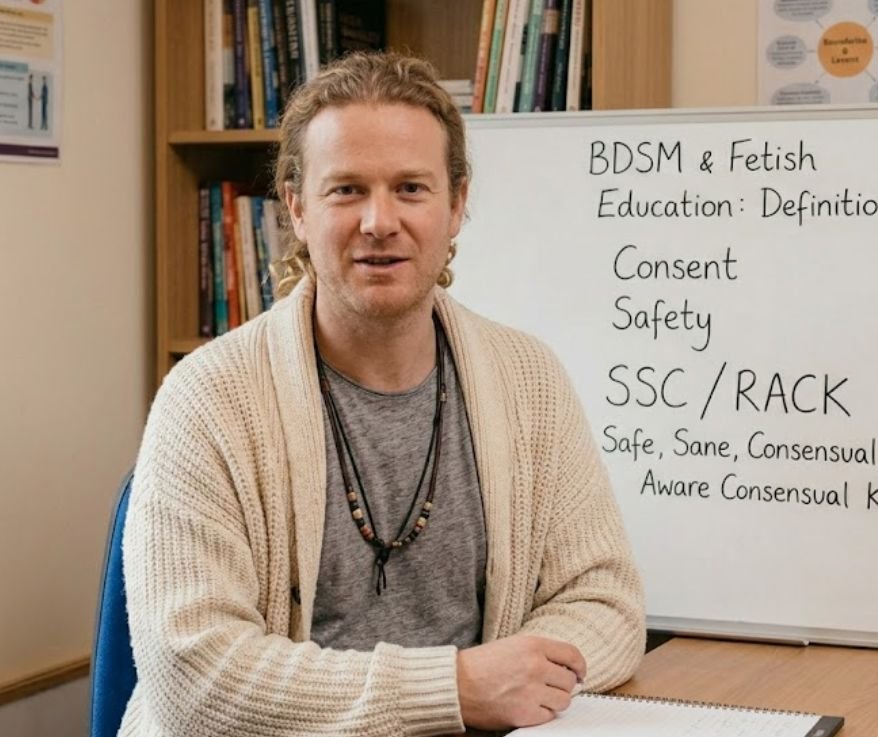
Kink: BDSM, and Fetish Chronicles

Kink, BDSM, and fetish are distinct yet interconnected aspects of human sexuality that many people explore to express their deepest desires and fantasies.

This alternative lifestyle revolves around power dynamics, role-playing, and the exploration of pleasure, despite common societal misconceptions.

Whether you are new to these topics or looking to expand your understanding, this resource covers the basics of BDSM dynamics, common kinks, and fetishes.

You will learn about safety, consent, and communication, the crucial pillars for engaging in these practices responsibly.


What is BDSM?

BDSM is an acronym for Bondage, Discipline, Dominance, Submission, Sadism, and Masochism.

It is a variety of sexual practices involving power dynamics and the consensual exchange of control.

Beyond the physical acts, BDSM is a diverse subculture built on a foundation of trust and communication.

A lady with chains tied to her hands in the practice of BDSM

The Core Components

  • Bondage and Discipline: Physical restraint or control using ropes, cuffs, or other tools. This encourages vulnerability and reinforces emotional connections.
  • Dominance and Submission (D/s): Exploring power dynamics where one partner assumes a dominant role while the other submits. This can be a liberating exchange of power. This is determined by the BDSM test.
  • Sadism and Masochism (S&M): Giving and receiving pleasure through physical sensation or pain, such as impact play, grounded in mutual respect.

Explore BDSM for Beginners.


What is Kink?

Kink refers to non-mainstream sexual activities and fantasies. It is an umbrella term for “unconventional” pleasure that challenges traditional sexual norms.

Kink is often about the actions or the scenarios played out between partners and is determined by the kink test. Explore the foundational basics for kink practice.

Kink roleplay

Common Kink Practices

  • Role-Playing: Stepping into characters or alternate realities (e.g., age play, occupational roles, or fantasy scenarios).
  • Sensory Play: Using blindfolds, wax, ice, or different textures to heighten or deprive specific senses.
  • Voyeurism and Exhibitionism: The erotic thrill of watching others or being watched by others in a consensual setting.
  • Pet Play: A specific form of role-play where individuals adopt the persona of an animal for psychological comfort or erotic fun. Explore kink for beginners.

What is Fetishism?

Fetishism involves a strong sexual attraction to specific objects, materials, or non-sexual body parts.

For a person with a fetish, these specific stimuli are often a central part of their sexual identity and are frequently necessary for full sexual arousal. Explore fetishism here.

Fetish

Common Fetish Categories

  • Material Fetishes: An intense attraction to the look, smell, or feel of specific fabrics, such as leather, Latex, Nylon, or PVC.
  • Partialism (Body Parts): Arousal focused on specific body parts, such as a foot fetish, hair, or hands.
  • Object Fetishes: Focusing on items such as high heels, uniforms, or specific gear used in play. See types of fetishes.

The Intersection: How They Work Together

While distinct, these worlds often overlap. A BDSM scene (Power Exchange) might include a Kink (Role-playing) while the participants wear specific Fetish clothing (Latex).

Together, they create a rich, complex experience that invites deep exploration of human desire.


The Psychology: Why We Explore

These practices tap into the mind’s inner workings, providing insights into control, trust, and emotional connection.

  • Power and Control: Surrendering control can provide a “mental reset” and relief from everyday stress, while taking control can feel empowering and grounding.
  • Emotional Intensity: Physical and emotional intensity allow participants to disconnect from routine concerns and immerse themselves in the “now.”
  • Coping and Healing: For many, these practices serve as a form of therapy or a coping mechanism to process complex emotions in a safe and controlled environment.

The Essentials: Consent, Communication, and Safety

In the world of BDSM, kink, and fetish, safety is the foundation of every interaction.

  • Communication: Discussing desires, boundaries, and safewords before the scene begins is mandatory. Explore communication.
  • Aftercare: Providing emotional and physical support after a scene ensures all participants feel cared for, grounded, and safe.

Practical Tips for Beginners

  • Learn the Basics: Familiarize yourself with terminology and the “rules of the road.”
  • Start Slow: Begin with “Kink-lite” activities before moving to intense BDSM or specific fetish play.
  • Join a Community: Use platforms like FetLife or local “Munches” (social meetups) to learn from experienced practitioners.

Myths and Misconceptions

Many myths misrepresent kink, BDSM, and fetishism as abusive, shameful, or linked to trauma.

In reality, these interests are common, consensual, and part of healthy sexual diversity.

Ethical practice relies on communication, consent, and boundaries, separating fantasy and desire from harm or dysfunction. Explore BDSM myths and misconceptions.