
Last updated on October 21st, 2026 at 10:08 am
When the National Coalition for Sexual Freedom surveyed more than 4,000 kink practitioners, 95.9% agreed that consent can be revoked at any moment. Roughly one in eleven still believed a submissive’s contract could cancel that right, which is simply false.
BDSM consent carries more weight than ordinary sexual agreement, because scenes can involve pain, restraint, and deliberate imbalances of power.
Kink communities answered that weight with detailed negotiation, safe words, and a shared rule that anyone may stop at any time.
Those habits work well, yet myths about contracts, alcohol, and role play still lead people into real harm.
Consent here means far more than a single yes before play begins. It must be informed, freely given, specific, and renewable throughout every scene.
By the final FAQ, you will know how consent gets built, tested, withdrawn, and repaired between partners.
Table of Contents
What Is BDSM Consent?
BDSM consent is a free, informed, and specific agreement to take part in negotiated kink activities, given by adults with full capacity. It covers each activity separately, continues throughout a scene, and ends the instant any participant withdraws it.
Five Elements of Valid Consent
Planned Parenthood teaches consent through the acronym FRIES, and its five-part consent model translates neatly into kink practice.
Freely Given
Agreement only counts when nobody feels pressured, guilted, threatened, or worn down into saying yes.
A submissive who agrees because a partner sulks, nags, or threatens to leave has not consented freely.
Dominants should watch for hesitation and treat a reluctant yes as a signal to pause and talk.
Reversible
Anyone may change their mind at any point, even halfway through an activity they requested enthusiastically.
Earlier agreement, written contracts, and role play never override a present-tense stop.
This is why every scene needs agreed stop words that both partners recognize and respect instantly.
Informed
Partners need accurate information about what an activity involves, including its physical, emotional, and practical risks.
Agreeing to rope bondage without knowing about nerve compression, or to impact without knowing about bruising, falls short.
Honest discussion of dangers sits at the core of the risk-aware approach that many kinksters follow.
Enthusiastic
Genuine consent sounds and looks like wanting, rather than tolerating, putting up with, or trying to please.
Enthusiasm can be quiet, since some people express desire calmly, yet it should never look like resignation.
A partner who seems flat, frozen, or distant deserves a check-in before play continues.
Specific
Saying yes to one activity never implies yes to another, however closely related they may seem.
Consent to spanking does not cover a cane, and consent to light bondage does not cover suspension.
Each new element needs its own discussion, ideally recorded while listing hard and soft boundaries before the scene.
Capacity: Alcohol, Drugs and Altered States
Consent also depends on a person’s ability to choose clearly in the moment, not only on their words.
In England and Wales, section 74 of the Sexual Offences Act 2003 says a person consents when they agree by choice and have the freedom and capacity to choose.
Many other legal systems apply similar tests, though wording and thresholds differ between jurisdictions.
- Alcohol and drugs: Intoxication clouds judgment and dulls pain signals, so most community events ban play after drinking.
- Exhaustion and illness: A partner running on no sleep or fighting a fever may agree to things they would normally refuse.
- Subspace and topspace: Floaty, euphoric states can make people agree to more intensity than they negotiated beforehand.
- Emotional crisis: Grief, panic, or a recent trauma can leave someone unable to weigh choices clearly or speak up.
The safest rule is simple: renegotiate nothing mid-scene, and save new requests for a sober conversation afterward.
Consent Within Power Dynamics
Power exchange can blur consent if partners forget that authority is borrowed rather than owned.
A dominant’s control exists only because a submissive grants it, and that grant can be reduced or withdrawn at any time.
The NCSF Consent Counts survey found 87.4% of respondents disagreed that a contract removes a submissive’s right to revoke consent.
- Contracts are symbolic: Written agreements help clarify expectations, but they cannot legally override a later withdrawal of sexual consent.
- Ongoing relationships need renewal: Long-term and 24/7 dynamics should schedule regular reviews, because feelings and circumstances change.
- Dominants can withdraw too: A top may stop any scene that feels unsafe, uncomfortable, or simply wrong in the moment.
- Status never excuses pressure: Experienced players, teachers, and popular community members follow the same rules as everyone else.
Good dominants treat consent as the foundation of their authority, which is why responsible dominance always starts with listening. Couples can record their agreements by putting agreements in writing, while remembering that paper never replaces a present-tense yes.
Consensual Non-Consent (CNC)
Consensual non-consent describes scenes where partners agree in advance to role-play resistance, struggle, or overpowering.
Fantasies of this kind are common, and a University of North Texas dissertation by Jenny Bivona found 62% of 355 female students reported having had one.
Only 9% of those fantasies were completely aversive, while 45% were entirely erotic, and a fantasy about force is not a wish for it in real life.
CNC carries higher emotional and ethical risk than most kink, so experienced players recommend several firm safeguards.
- Know each other well: Reserve CNC for established, trusted partners rather than new acquaintances or casual hookups.
- Negotiate in great detail: Agree on exact activities, words, intensity, and hard limits long before any scene happens.
- Use a safe word that overrides everything: In-character protests like “no” and “stop” need a separate, unmistakable exit signal.
- Plan aftercare and a debrief: Intense role play can stir shame, fear, or old memories that need gentle attention afterward.
These scenes sit within scripted role-play scenarios and mind games and psychological play, which demand similar care.
Research on CNC practitioners remains limited, so treat community guidance as experience rather than settled evidence.
How to Withdraw Consent and Respond
Withdrawing consent should feel easy, and responding well should feel automatic for every partner involved.
- Say it plainly: Use your safe word, a clear “stop,” or an agreed non-verbal signal, without needing to explain why.
- Stop at once: The other partner halts immediately, releases any restraints, and checks breathing, circulation, and emotional state.
- Skip the guilt: Show appreciation when someone calls a halt, because punishing a withdrawal teaches people to stay silent next time.
- Talk later: Discuss what happened once both people feel calm, using tips for talking through scenes without blame.
When Consent Is Violated
Accidents happen when signals get missed, but ignoring a stop or pushing past a known limit is abuse.
Someone who experiences a violation deserves belief, comfort after intense play, and help from close friends, a counselor, or a support line.
Reporting options range from event organizers to police, and survivors should choose whatever path feels safest.
Each of these principles connects to our consent and safety hub and to the wider world of BDSM, where consent remains the line between play and harm.
Conclusion
Nearly every surveyed kinkster agreed that consent can be revoked at any moment, and that principle anchors everything above.
Valid BDSM consent is freely given, reversible, informed, enthusiastic, and specific, coming from adults with full capacity to choose.
Power exchange, contracts, and CNC all operate inside that rule, never somewhere above it.
Withdrawals deserve gratitude rather than guilt, and violations deserve belief and real support.
Your next step: talk through these five elements with your partner this week, then read our explainer on risk-aware consensual kink before planning anything new.
Frequently Asked Questions
Can you withdraw consent in the middle of a BDSM scene?
Yes, anyone can withdraw consent at any moment, even during an activity they requested, and their partner must stop immediately without arguing, sulking, or asking for an explanation.
Is a BDSM slave contract legally binding?
No, BDSM contracts carry no legal force over sexual consent, so they work only as symbolic agreements that clarify shared expectations and can be revoked at any time.
Can someone consent to BDSM after drinking alcohol?
Intoxication weakens judgment and the capacity to choose, so most experienced players and community events avoid play after drinking and save negotiations for completely sober conversations held later.
What does consensual non-consent mean in BDSM?
It describes scenes where partners agree well in advance to role-play resistance or overpowering, protected by detailed negotiation, firm limits, an overriding safe word, and carefully planned aftercare.
Disclaimer: This article is for educational and informational purposes only and does not constitute medical, psychological, or therapeutic advice. All content assumes and is intended for consenting adults (18+). This site does not endorse or provide instruction for any non-consensual activity, or any content involving minors. If you are exploring kink, BDSM, or fetish practices, consult reputable educational resources and, where relevant, a licensed sex therapist or medical professional. If you are in crisis or experiencing abuse, contact appropriate local support services immediately.
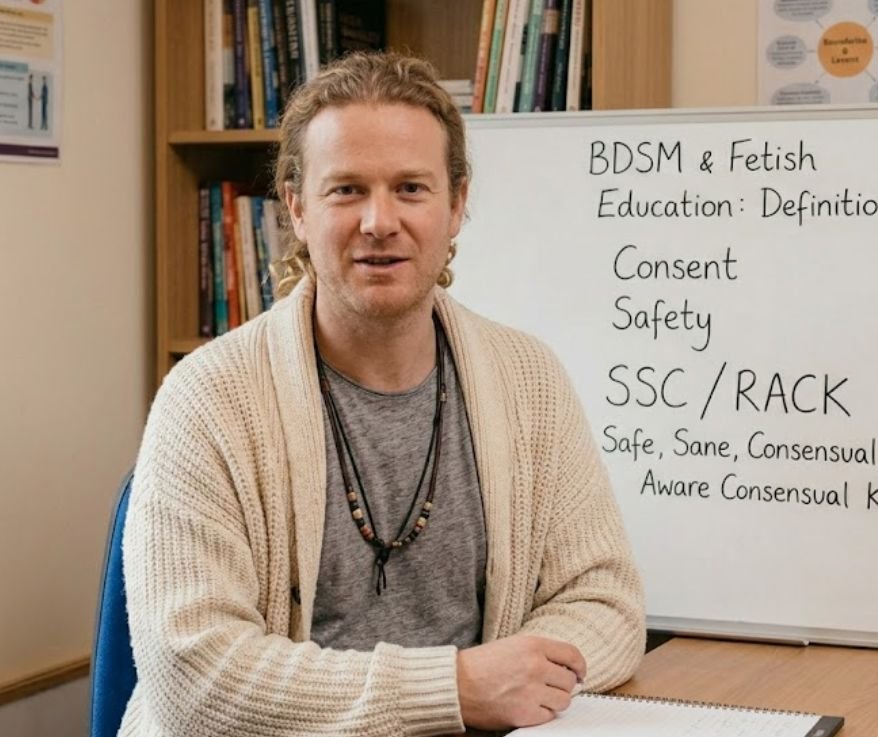
Morgan Ellis is the author and researcher behind Kink: BDSM and Fetish Chronicles. With years of study into the psychology, research, and lived experience of alternative sexuality, Morgan writes about kink, BDSM, and fetish from an educational, judgment-free perspective — grounded in consent, communication, and safety. Every article on this site reflects a commitment to honest, responsible information for curious and experienced adults alike.