

Last updated on October 21st, 2026 at 07:38 am
Istanbul urologists reported in 2026 that a 32-year-old man arrived with a swollen, bruised penis after wearing a chastity cage. Ice, compression bandages, and patience healed him within three weeks, but his case shows exactly why fit and timing matter.
Published in the Haydarpaşa Numune Medical Journal, that report is a useful reminder that chastity play carries physical stakes alongside its psychological thrill.
A chastity cage is a locking device that encloses the penis, preventing full erections and orgasm until a partner, called the keyholder, chooses otherwise.
People wear them for denial, power exchange, teasing, and intimacy within committed kink relationships.
Comfort depends almost entirely on careful sizing, gradual wear, and honest communication between partners.
Here you will learn the main device types, materials, and sizing steps. Later parts cover wear time, hygiene, and the warning signs that mean unlock now.
Table of Contents
Chastity Cage Meaning in BDSM
In kink, a chastity cage represents surrendered control, because the wearer hands sexual release to someone else.
The keyholder decides when the device comes off, which turns everyday moments into reminders of the dynamic.
Chastity sits naturally within chastity in female-led relationships, though people across all genders and orientations enjoy it.
It also connects closely with orgasm control and denial, where anticipation builds over hours, days, or longer.
Wearers describe a mix of frustration, arousal, and devotion that grows stronger the longer they stay locked.
Keyholders frequently enjoy the trust involved and the playful power of holding a tiny key.
These feelings belong to the broader psychology covered in how power exchange works, where control is given freely rather than taken.
Types of Chastity Devices
Devices vary by coverage, design, and anatomy, and each style suits different bodies and goals.
Tube or Standard Cage
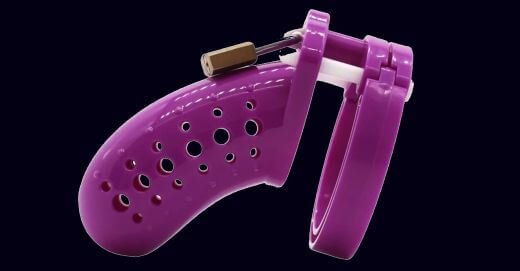
The tube cage is the most popular chastity design, pairing a curved, ventilated tube with a separate base ring that sits behind the testicles.
Many models include several ring sizes, which makes them a sensible first purchase.
Choose a tube close to your soft length, because extra room lets skin shift and rub.
Flat or Inverted Cage
Flat cages are shorter than standard tubes and sit almost level against the body, while inverted cages point the penis inward.
Both feel stricter and hide better under tight clothing, which appeals to people planning daytime wear.
Their snug fit leaves little margin for error, so measure carefully and build wear time slowly.
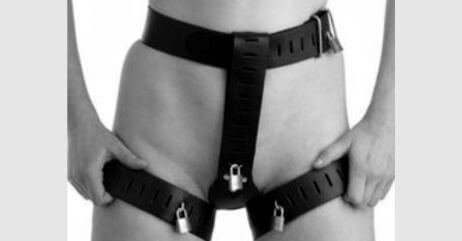
Full Chastity Belt
A full belt combines a waistband with a front shield, spreading pressure around the hips instead of relying on a single ring.
Belts suit longer wear and come in versions designed for both penises and vulvas.
They usually require custom measurements, and quality steel belts cost considerably more than simple cages.
Vulva Shields and Panels
Shields for people with vulvas use a smooth plate that blocks touch while leaving openings for urination and hygiene.
Some attach to a full belt, while lighter versions use a hip strap that suits short sessions at home.
Comfort depends on a contoured profile, soft edges, and careful cleaning after every wear.
Ball Trap or Ball Lock
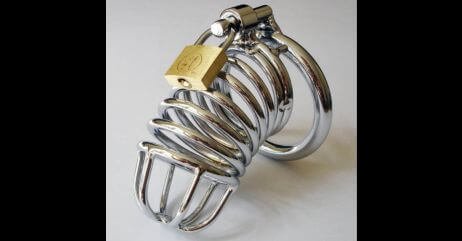
A ball trap adds a narrow ring or bar that holds the testicles below the base ring, preventing the cage from slipping off.
Many wearers find it improves security, but it raises the stakes on sizing considerably.
Too tight a trap can restrict blood flow, so pain, swelling, or color change mean unlock immediately.
Silicone or Soft Cages
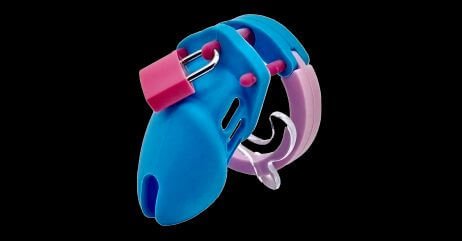
Silicone cages bend with the body, which makes them lighter, quieter, and gentler than metal or rigid plastic designs.
They suit beginners testing interest during short sessions, especially around the house or overnight trials.
Their flexibility also means they hold less securely, so determined wearers can sometimes slip out of them.
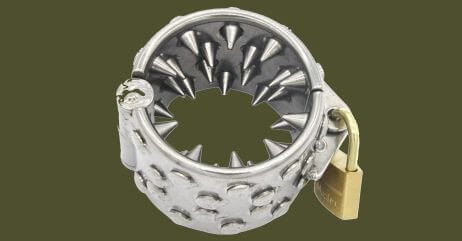
Materials Compared
Material affects weight, hygiene, comfort, and how easily a device passes through daily life.
| Material | Weight | Hygiene | Best for |
|---|---|---|---|
| Stainless steel | Heavy | Excellent, non-porous | Long-term wear, durability |
| Titanium | Light | Excellent, non-porous | Extended wear, nickel-sensitive skin |
| Resin or polycarbonate | Light | Good, if smooth and uncracked | Beginners, discreet daily wear |
| Medical silicone | Very light | Good, non-porous | First experiments, short sessions |
Metal devices can trigger airport metal detectors, so many travelers switch to resin or plastic for flights.
Cheap plastic can crack or develop rough seams, which scratch skin and harbor bacteria.
How to Measure for a Chastity Cage
Fit decides almost everything about comfort, and most problems trace back to the base ring.
Measure when completely soft, ideally after a warm shower, because cold shrinks tissue and skews numbers.
- Base ring diameter: Measure around the base of the penis and scrotum together, then choose a ring that leaves room for one finger.
- Cage length: Measure the soft length from base to tip, then pick a cage equal to or slightly longer.
- Gap size: The gap is the space between the ring and cage, and too small a gap pinches while too large lets skin bulge.
- Ring profile: Curved or anatomical rings follow the body better than flat circles for many wearers.
Many brands include several ring sizes, which lets you test different combinations before committing to one.
How to Put On a Chastity Cage
Fitting becomes quick with practice, but go slowly the first few times and use plenty of patience.
- Start soft and relaxed: Fit the device only when fully flaccid, waiting out any arousal before trying again.
- Prepare the skin: Wash, dry thoroughly, and apply a little water-based lubricant to ease movement.
- Place the base ring: Pass one testicle through the ring, then the other, followed by the penis.
- Slide on the cage: Guide the penis into the tube, keeping any foreskin forward and smooth.
- Align and lock: Join the cage to the ring, insert the pin or lock, and check nothing is pinched.
- Check comfort: Walk, sit, and bend, then remove it immediately if you feel sharp pain or numbness.
If arousal interferes, a cool cloth or a few minutes of distraction usually helps.
Safe Wear Times, From First Hour to Long Lockups
Start with an hour or two while awake, then increase gradually as your body adapts over several weeks.
Nighttime erections can push painfully against a cage, so many wearers remove it overnight at first.
Experienced wearers sometimes stay locked for days, but only after building tolerance and checking skin daily.
Agree on time limits and boundaries before any lockup, including when the device must come off regardless of the game.
Hygiene While Locked
Moisture and trapped residue under a cage can quickly cause irritation, odor, or infection.
The NHS lists poor washing and irritants such as soap among the causes of balanitis, a sore, swollen penis head. It recommends washing daily with plain water or an emollient, then drying gently.
- Rinse daily: Shower while wearing the device, flushing water through the openings to clear residue.
- Dry thoroughly: Use a hairdryer on a cool setting or a soft towel to remove trapped moisture.
- Unlock for deep cleaning: Remove the cage every few days, if possible, to wash skin and device separately.
- Clean the device: Wash with mild soap and warm water, rinse well, and check for cracks or rough edges.
- Watch for irritation: Redness, itching, discharge, or odor mean the cage needs to come off.
Warning Signs and Emergencies
Unlock immediately if anything looks or feels wrong, because swelling can worsen fast once circulation suffers.
The Istanbul patient developed swelling and a large bruise, which the published case report attributes to pressure from the device.
- Unlock now: Numbness, tingling, cold or bluish skin, sharp pain, or swelling that does not settle.
- Seek urgent care: The NHS treats sudden testicle pain as an emergency, because twisting called torsion can cost a testicle.
- Foreskin stuck behind the ring: The NHS describes a foreskin that cannot return as paraphimosis, another medical emergency needing A&E.
- Never force removal: If swelling traps the device, go to hospital rather than cutting or pulling it yourself.
Always keep an emergency key in a known place, or use numbered plastic seals that snap off instantly.
Safe words still apply while locked, and a safe word for lockups should override any rule about keyholder control.
Keyholders, Consent and Communication
Chastity works best as a living agreement both partners revisit, not a set-and-forget arrangement.
Partners should agree on duration, release rules, check-ins, and what happens if either person wants to stop.
Long arrangements need consent for long-term play, revisited regularly as feelings and circumstances change.
Keyholders take responsibility for the wearer’s wellbeing, which is why female dominance basics emphasize attentive, caring control.
After unlocking, offer care after unlocking, including a skin check, reassurance, and a chat about how the lockup felt.
Conclusion
The Istanbul patient recovered fully, yet his three-week recovery shows how fast a careless lockup can turn painful.
Most problems are preventable with careful measuring, short first sessions, daily hygiene, and an emergency key within reach.
Treat numbness, color changes, or sudden pain as a reason to unlock at once, never as a test of devotion.
Keep talking openly with your keyholder about limits, feelings, and anything that shifts between lockups.
When you want to deepen the dynamic, read about denial and release dynamics and plan your next lockup together.
Frequently Asked Questions
What does a chastity cage do?
A chastity cage is a locking device that encloses the penis, preventing full erections and orgasm until a trusted keyholder unlocks it, usually within consensual power exchange play.
How long should beginners wear a chastity cage?
Beginners should start with one or two hours while awake, increasing slowly over several weeks. Remove the cage overnight at first, and unlock immediately if any pain appears.
Is a chastity cage supposed to hurt?
A well-fitted cage feels snug but not painful, with no pinching, numbness, or color change. Ongoing discomfort usually signals the wrong ring size, cage length, or ring gap.
How do I find the right chastity cage size?
Measure the base ring around penis and scrotum when soft, leaving one finger of room. Choose a cage length equal to or slightly longer than your soft length.
Disclaimer: This article is for educational and informational purposes only and does not constitute medical, psychological, or therapeutic advice. All content assumes and is intended for consenting adults (18+). This site does not endorse or provide instruction for any non-consensual activity, or any content involving minors. If you are exploring kink, BDSM, or fetish practices, consult reputable educational resources and, where relevant, a licensed sex therapist or medical professional. If you are in crisis or experiencing abuse, contact appropriate local support services immediately.

Morgan Ellis is the author and researcher behind Kink: BDSM and Fetish Chronicles. With years of study into the psychology, research, and lived experience of alternative sexuality, Morgan writes about kink, BDSM, and fetish from an educational, judgment-free perspective — grounded in consent, communication, and safety. Every article on this site reflects a commitment to honest, responsible information for curious and experienced adults alike.