
Last updated on October 17th, 2026 at 01:13 pm
Jess and Marco grabbed silver duct tape for their first night of restraint play, and peeling it away took skin, arm hair, and most of the mood. Their mistake is a common one, and bondage tape exists to prevent it.
Jess and Marco are a composite couple, built from typical beginner experiences rather than one real pair, yet their story will sound familiar to plenty of readers.
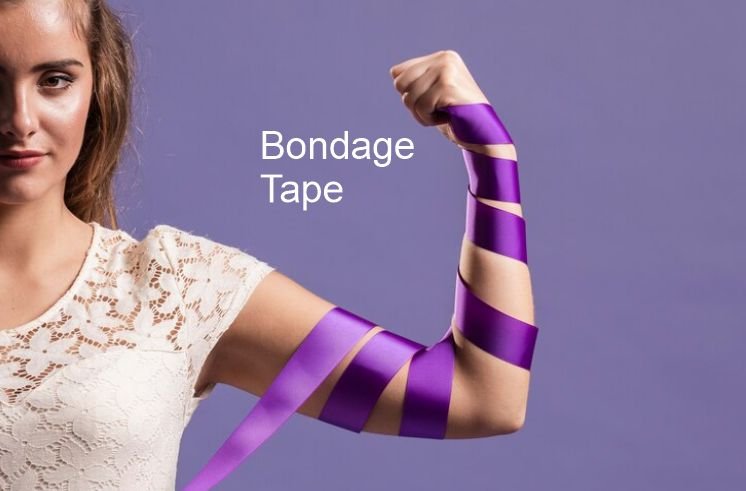
Bondage tape is a stretchy PVC wrap that clings only to itself, so it restrains without glue touching skin or hair.
Below, you will find how the tape works, why household tape causes injuries, which simple positions suit beginners, and why taping a mouth shut is riskier than it looks.
Safety checks, quick removal, and cleaning tips follow, all grounded in published research and the practical habits experienced players pass along to newcomers.
Table of Contents
What Is Bondage Tape?
Bondage tape is a wide, stretchy ribbon of PVC or vinyl that sticks to itself through static cling rather than any layer of glue.
Because nothing adhesive touches the body, the tape lifts away from skin and hair without pulling, and most rolls can be cleaned and reused many times.
Rolls are commonly sold about two inches wide in several colors, which makes the tape easy to spot, cut, and unwind during play.
The tape belongs to the wider family of bondage styles and techniques, and it sits comfortably within BDSM basics for newcomers because it asks for no knot skills at all.
Couples who later want more structure can move on to choosing your first rope, while tape remains handy for quick, low-pressure scenes.
Why Household Tape Causes Injuries
Duct tape, packing tape, and electrical tape rely on strong adhesives that grip the outer layer of skin and tear it away on removal.
Even adhesives designed for patients cause harm: a US hospital skin injury study found a mean daily prevalence of 13% among adult inpatients.
Household tapes were never designed for skin contact at all, so they carry an even higher chance of stripping, blistering, and painful hair removal.
That was the lesson Jess and Marco learned the hard way, with raw wrists that stayed tender for several days afterward.
Swapping to proper bondage tape removed the adhesive problem entirely, although it did nothing to remove the risks of pressure, which come next.
How Common Is Interest in Restraint?
Wanting to be held still is a widely shared fantasy, so curiosity about tape and cuffs is nothing unusual.
In a survey of 4,000-plus Americans, sex researcher Justin Lehmiller found that 85% of women and 73% of men had fantasized about bondage.
Interest in kink also appears compatible with good mental health, according to a Dutch study of 902 practitioners published in 2013.
Those practitioners reported higher subjective well-being than a comparison group, although an online volunteer sample cannot prove that kink itself causes better well-being.
Bondage Tape Positions and Uses
Tape adapts to several kinds of play, and the uses below run roughly from simplest to riskiest, each with its own safety rules.

Wrist and Ankle Restraints
Start with positions that keep joints relaxed and breathing free, then add complexity only after both partners feel comfortable with the basics.
- Wrists wrapped together in front of the body, which keeps the shoulders relaxed and lets the tied partner gesture or signal easily.
- Ankles wrapped together while lying down, a gentle position that limits movement without placing strain on any joint.
- Wrists wrapped around a padded bedpost or sturdy headboard rail, with enough slack that elbows can bend comfortably.
- Forearms wrapped together behind the back, held only for short periods because this position loads the shoulders quickly.
Wrap the tape flat rather than twisted, and avoid stretching it tight as you go, because stretched PVC contracts and squeezes harder afterward.
Leave enough space to slide two fingers under every wrap, and skip the neck, joints, and any area where you can feel a pulse near the surface.
Full-Body Wrapping
Full-body wrapping, sometimes called mummification, encloses the arms, torso, and legs, and it carries far more risk than wrist play.
A tightly wrapped chest can restrict breathing, while large areas of covered skin trap heat, so overheating and panic can build quickly.

- Keep the head, face, and neck completely uncovered, and never wrap the chest tightly enough to limit a full, deep breath.
- Wrap over thin, breathable clothing, which keeps skin cooler and gives scissors a safer path during removal.
- Keep sessions short, stay within arm’s reach the entire time, and cut your partner free at the first sign of distress.
- Skip it entirely for anyone with asthma, heart problems, claustrophobia, or panic attacks, since enclosure can trigger symptoms rapidly.
A fully wrapped person cannot catch themselves, so do this lying on a bed or padded floor, never standing upright.
If wrapping the upper body appeals to you, read about chest and torso bondage before attempting anything close to full enclosure.
Tape Blindfold
Bondage tape makes a simple blindfold because it clings to itself and leaves eyebrows, eyelashes, and hair untouched on removal.
Wrap a single loose band over the closed eyes and around the head, keeping it well above the nose and mouth.

Firm pressure on the eyes can cause pain and lingering blurred vision, so the band should rest lightly rather than squeeze.
Many players still prefer padded options, which come off faster, and you can compare them in our piece on blindfolds and sensory play.
Tape Gag
A bondage tape gag is the riskiest use of tape, and many kink educators recommend skipping it altogether.
Because the tape sticks only to itself, a tape gag means a band wrapped around the head over the mouth, which takes longer to remove than most people expect.
Covering the mouth also leaves the nose as the only airway, and a cold, allergy, nosebleed, or bout of nausea can block it without warning.
A covered mouth silences any spoken safe word as well, removing the simplest way a restrained partner can stop play.

Partners who still choose to try it should treat these rules as a bare minimum, not as a promise of safety:
- Never gag anyone with a blocked or runny nose, and keep the nostrils completely clear of tape at every moment.
- Use one loose band rather than several layers, and never combine a gag with face-down positions or a wrapped chest.
- Agree on a nonverbal stop signal beforehand, such as dropping a held object, and never leave a gagged partner alone.
- Cut the tape away at the side of the head immediately if breathing changes, coughing starts, or nausea appears.
Anyone drawn to the feeling of being silenced should also look at safer gag alternatives that leave the nose clear and release in seconds.
Safety Checks and Fast Removal
Tape cannot tear skin like duct tape, yet tight wraps can still press on nerves and blood vessels around the wrists and ankles.
A 2023 Frontiers in Neurology series of 34 patients with damage to the superficial radial nerve near the wrist traced 18% of cases to compression.
That nerve supplies feeling to the back of the hand and thumb, so numbness there is a clear signal to unwrap immediately.
- Check fingers and toes every few minutes for coldness, pale or bluish skin, tingling, or weakness when gripping your hand.
- Keep blunt-tipped scissors within reach, slide the rounded blade between tape and skin, and cut away from the body.
- Agree on time limits beforehand, never leave a restrained partner alone, and avoid play after drinking or using recreational drugs.
Jess and Marco now run a short release drill before every scene, timing how quickly they can free each other with scissors. Pair that habit with picking a safe word plus a hand signal, and revisit consent and risk awareness whenever you try something new.
Buying, Cleaning and Reusing Bondage Tape
Look for tape sold specifically for bondage or body use, since some industrial PVC tapes carry adhesive backing that defeats the whole purpose.
Anyone with sensitive skin or contact allergies should wear a test strip on the inner forearm for an hour before using tape in a scene.
After play, wipe the tape with warm water and mild soap, let it air dry completely, and roll it back loosely onto its core.
Store rolls away from heat and sunlight, and replace any length that has cracked, lost its cling, or stayed sticky after cleaning.
Once tape feels familiar, many couples branch out into cuffs and other restraints or heavier metal cuffs and shackles for longer scenes.
Whatever you add next, leave time for caring for each other afterward, since even light restraint can stir surprising emotions.
Conclusion
Jess and Marco still wince at the memory of that duct tape night, though their sore wrists healed within about a week.
Bondage tape solved their adhesive problem, yet it only works well when partners wrap loosely, watch circulation, and keep scissors close.
Treat tape gags and full wraps with real caution, keep early scenes short, and unwrap at once if any numbness or color change appears.
Pick up a roll made for body use, practice a loose wrist wrap together tonight, and time your release drill before play begins.
Frequently Asked Questions
Does bondage tape stick to skin or hair?
No, bondage tape clings only to itself through static, so it peels away from skin and hair cleanly, unlike duct tape or packing tape with their strong adhesives.
Is it safe to use bondage tape as a gag?
Tape gags carry real breathing risks, because a blocked nose leaves no airway and a covered mouth silences safe words, so many kink educators recommend avoiding them altogether.
How tight should bondage tape be?
Wrap flat and loose enough to slide two fingers under each layer, avoid stretching the tape as you wrap, and unwrap immediately if fingers tingle or change color.
How do you clean and reuse bondage tape?
Wipe used tape with warm water and mild soap, let it dry completely, then roll it loosely and store it away from heat, direct sunlight, and anything sharp.
Disclaimer: This article is for educational and informational purposes only and does not constitute medical, psychological, or therapeutic advice. All content assumes and is intended for consenting adults (18+). This site does not endorse or provide instruction for any non-consensual activity, or any content involving minors. If you are exploring kink, BDSM, or fetish practices, consult reputable educational resources and, where relevant, a licensed sex therapist or medical professional. If you are in crisis or experiencing abuse, contact appropriate local support services immediately.

Morgan Ellis is the author and researcher behind Kink: BDSM and Fetish Chronicles. With years of study into the psychology, research, and lived experience of alternative sexuality, Morgan writes about kink, BDSM, and fetish from an educational, judgment-free perspective — grounded in consent, communication, and safety. Every article on this site reflects a commitment to honest, responsible information for curious and experienced adults alike.