

Last updated on October 21st, 2026 at 10:57 pm
Bea laughed so hard during her first hogtie that she could not catch her breath, face-down on the bed. Owen snapped the quick-release connector open in two seconds, rolled her onto her side, and both agreed the setup had worked.
Owen and Bea are fictional, a scenario assembled to show the most important habit in hogtie play.
A hogtie links bound wrists and ankles behind the back with a short connector, usually with the person lying face-down, and it ranks among the most recognizable bondage positions.
It also restricts breathing more than most people realize, which is why many police departments across the country have restricted or banned it outright.
The sections below explain the main variations, how connectors work, what breathing research shows, who should avoid the position, and how to build a release plan before anyone gets tied.
Table of Contents
What Is a Hogtie?
A hogtie restrains the wrists behind the back, binds the ankles together, and then links the two with a strap, rope, or chain.
The name comes from livestock handling, though kink players have long adapted the idea into a consensual position built on trust.

It belongs to the wider family mapped out in a roadmap of bondage styles, and it carries the power and surrender themes described in how BDSM dynamics work.
The classic version places the bound partner face-down with knees bent, which pulls the hands and feet toward each other.
That posture creates the feeling of near-total helplessness many people seek, yet it also creates the breathing risk discussed later.
Why People Enjoy Hogtie Bondage
People drawn to hogties describe the appeal in practitioner forums and workshops, so treat these explanations as community experience rather than research findings.
Many enjoy the intense sense of surrender, since a hogtied person can barely move and must trust their partner completely.
Others enjoy the struggle itself, testing restraints that hold firm, while partners on the other side enjoy the control and attentiveness the position demands.
Hogties also feature heavily in captive and captor roleplay and in dominant-led restraint scenes, where the position underlines a clear power difference.
Whatever draws you to it, the same safety habits apply to every couple and every scenario.

Hogtie Variations, From Gentlest to Most Demanding
Variations differ mainly in body position and connector length, and both change how hard the body must work to breathe.
| Variation | Body position | Strain | Suitability |
|---|---|---|---|
| Side-lying loose hogtie | On the side, long connector | Low | Best starting point for beginners |
| Front hogtie | On the back or side, wrists and ankles in front | Low | Comfortable alternative with easy breathing |
| Loose face-down hogtie | Face-down, long connector, knees slightly bent | Medium | Short scenes only, with constant watching |
| Classic tight hogtie | Face-down, short connector, back arched | High | Experienced partners, very brief periods |
| Strappado or suspended hogtie | Arms lifted or body raised | Very high | Not recommended outside expert supervision |
A side-lying hogtie keeps the chest and stomach free, so it delivers most of the helpless feeling with far less breathing strain.
A front hogtie, sometimes called a reverse hogtie, binds wrists and ankles in front, which spares the shoulders and keeps the airway easy to watch.
Face-down versions should stay short, while arm-lifting variations put serious strain on shoulder joints and deserve hands-on training, much like lifting bound partners safely requires.
Hogtie Connectors: The Piece That Matters Most
The connector, the strap or rope joining wrists to ankles, decides both how intense a hogtie feels and how fast it ends.
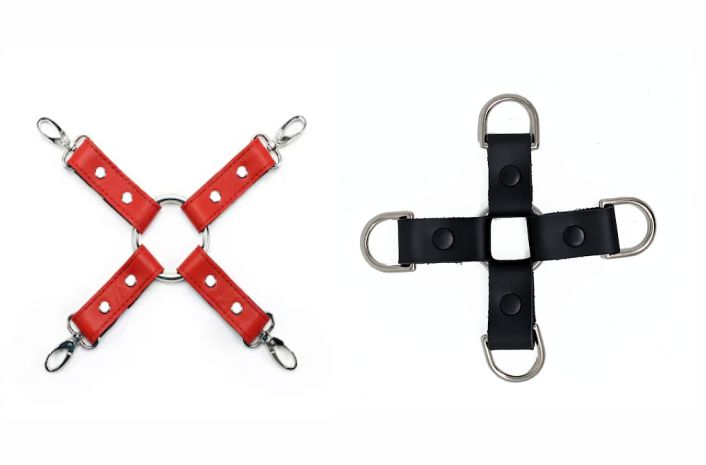
Most experienced players clip connectors to cuffs rather than tying them directly into rope, because a clip opens in seconds.
- Choose a connector with a quick-release snap or panic clip that opens under tension with one hand.
- Prefer adjustable straps, since a longer connector eases strain on shoulders, knees, and the lower back.
- Never padlock the connector itself, even when wrist or ankle restraints use locks.
- Release the connector first in any emergency, because unlinking wrists from ankles instantly relieves most strain.
Connectors pair naturally with buckled leather cuffs and the snap hooks found in many clip-together restraint kits.
Rope hogties look striking, yet they take longer to undo, so read up on picking rope for hogties and keep safety shears within reach.
The Breathing Risk: What Research Shows
Positional asphyxia happens when body position stops a person from breathing effectively, and face-down restraint is the best documented example.
A 1995 Justice Department bulletin warned that risk rises in face-down restraint, especially with drug or alcohol use, obesity, an enlarged heart, or exhaustion after struggling.
It urged officers to move restrained people off their stomachs as soon as possible and to watch breathing closely.
Laboratory evidence is more mixed than many warnings suggest, which is worth stating honestly.
In a 1997 emergency medicine study, 15 healthy, lean men lost about 13% of lung capacity in a hogtie restraint position.
Those volunteers showed no drop in blood oxygen, so the authors judged the change clinically minor for fit young men at rest.
Real-world cases look far less reassuring, because they combine restraint with exertion, intoxication, health problems, and face-down weight.
NBC News found at least 23 deaths involving hogtying or similar restraints in US police custody since 2010, and 22 of the 30 largest cities now prohibit the practice.
A 2021 lung reserve experiment adds that breathing capacity kept falling in a hands-behind-the-back posture, which matters for every classic hogtie.
Bea’s breathlessness came from laughing hard while face-down, which shows how quickly ordinary exertion can combine with position.
Rolling onto the side ended the problem immediately, and that simple move belongs in every hogtie plan.
Joints, Nerves and Circulation
Pulling wrists toward ankles loads the shoulders, elbows, knees, and lower back all at once, especially with a short connector.
Cuffs and rope at the wrists can press on nerves, so watch for tingling, numbness, weakness, or a hand that turns cold or pale.
Old shoulder injuries, tight hip flexors, and knee problems can all turn a hogtie painful within minutes, so start with a long connector.
Who Should Skip Hogties
Some bodies and situations make face-down restraint too risky, and a different position will deliver similar feelings with far less danger.
- Anyone who has been drinking or using drugs, since intoxication dulls breathing reflexes and slows reactions.
- People with heart disease, lung conditions, asthma, sleep apnea, or severe obesity, which appear repeatedly in restraint death research.
- Anyone recently exhausted from vigorous activity or struggling, because the body already needs more oxygen than usual.
- People who are pregnant, or who have back, shoulder, hip, or knee injuries that limit comfortable movement.
Never Hogtie Yourself Alone
Solo bondage removes the most important safety feature of all, which is another person who can release you instantly.
A self-tied hogtie can trap someone face-down if a clip jams, a cramp strikes, or breathing becomes difficult.
Even with scissors nearby, a hogtied person may not be able to reach them, so solo hogties should never be attempted.
Building a Release Plan
Plan the exit before the entry, so both partners know exactly what happens if anything feels wrong.
- Agree on a spoken safe word plus signals that need no words, such as dropping a held object.
- Keep safety shears and the connector’s release clip within easy reach of the active partner.
- Set a timer, keeping face-down hogties to a few minutes and checking breathing continuously.
- Unclip the connector first, then roll the partner onto their side before removing wrist and ankle restraints.
Avoid combining hogties with gags, because breathing restriction from both sources stacks quickly, as our piece on why gags and hogties clash explains.
The framework of RACK and informed risk suits hogties well, since both partners must accept risks that cannot be removed entirely.
Consent and Aftercare
Talk through limits, health conditions, and the exact variation before tying, and revisit core consent and safety principles if either partner feels unsure.
After release, help your partner stretch slowly, rub wrists and ankles, and offer water while muscles recover.
Intense restraint can leave people shaky or emotional, so plan time for unwinding after intense restraint with closeness, conversation, and rest.
Conclusion
Owen and Bea still use hogties, but only side-lying or loose, always with that quick-release connector within reach of Owen’s hand.
Their two-second recovery shows that preparation, not luck, is what keeps a hogtie scene enjoyable and calm for everyone involved.
Face-down positions restrict breathing, so keep them short, skip them entirely when health or intoxication raises the stakes, and never tie yourself alone.
Start with a side-lying hogtie and a long, clip-release connector on a bed, then practice the full release sequence together twice before your first real scene.
Frequently Asked Questions
Is hogtie bondage dangerous?
Face-down hogties reduce lung capacity and have been linked to deaths in police custody, so keep them short, prefer side-lying versions, and avoid them after drinking or exertion.
What is a hogtie connector?
A hogtie connector is a strap, rope, or chain linking wrist restraints to ankle restraints, and safer versions offer adjustable length and a quick-release clip that opens one-handed.
How long can someone stay in a hogtie?
Keep face-down hogties to a few minutes while watching breathing constantly, and allow longer sessions only in side-lying or front variations that leave the chest and stomach free.
Can you hogtie yourself safely?
No, solo hogties are never safe, because a jammed clip, cramp, or breathing problem can trap you face-down with no one nearby who can release you within seconds.
Disclaimer: This article is for educational and informational purposes only and does not constitute medical, psychological, or therapeutic advice. All content assumes and is intended for consenting adults (18+). This site does not endorse or provide instruction for any non-consensual activity, or any content involving minors. If you are exploring kink, BDSM, or fetish practices, consult reputable educational resources and, where relevant, a licensed sex therapist or medical professional. If you are in crisis or experiencing abuse, contact appropriate local support services immediately.

Morgan Ellis is the author and researcher behind Kink: BDSM and Fetish Chronicles. With years of study into the psychology, research, and lived experience of alternative sexuality, Morgan writes about kink, BDSM, and fetish from an educational, judgment-free perspective — grounded in consent, communication, and safety. Every article on this site reflects a commitment to honest, responsible information for curious and experienced adults alike.