
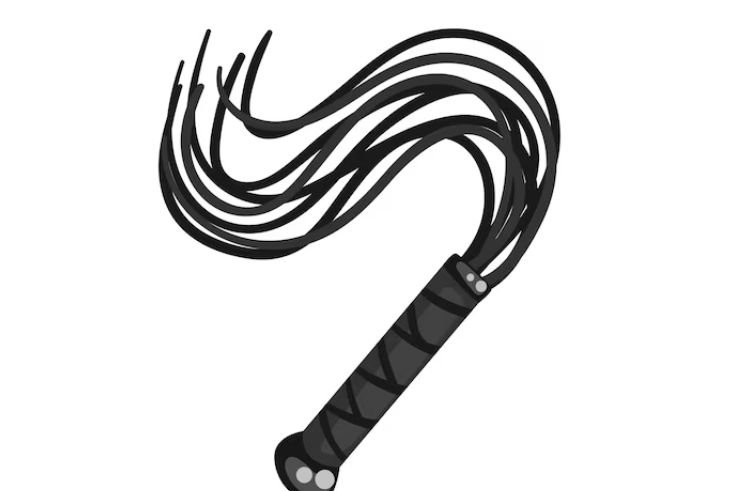
Last updated on October 21st, 2026 at 04:02 pm
High-speed photographs taken in the 1920s finally answered a question that physicists had puzzled over for years. The crack of a whip is a miniature sonic boom, produced when the tip outruns sound, moving faster than 750 miles per hour.
That speed explains why whips sit at the far end of impact play, beyond paddles, floggers, and crops.
A tip moving faster than sound can split skin, injure an eye, or wrap onto the ribs before anyone reacts.
Plenty of experienced players still love single tails for their precision, theater, and the deep trust they demand from both people.
What follows covers the main whip types, how they are built, and what makes them so risky.
You will also find a realistic, step-by-step learning path, the throws handlers practice first, safe targets, consent and legal questions, first aid, and care.
Table of Contents
What Is a Whip in BDSM?
A whip in BDSM is an impact tool with a handle and one long, flexible tail, used to deliver sharp, stinging strikes.
Unlike floggers, which spread force across many falls, a whip concentrates all its energy into a single narrow tip.
That concentration produces intense, precise sensations, ranging from feather-light flicks to cutting strikes that can welt or break skin.
In kink, whips serve three main purposes: physical sensation, dramatic sound, and a powerful symbol of control within power exchange.
Most players treat the whip as an advanced tool, adding one only after plenty of experience with paddles, floggers, and crops.
The term also covers a broader family, including snake whips, signal whips, bullwhips, stockwhips, and the multi-tailed cat o’ nine tails.
Why a Whip Cracks, and Why That Matters
A whip works like a tapering waveguide, carrying energy from the handle down a body that grows steadily thinner.
As the loop travels toward the end, the same energy moves through less and less mass, so the tip accelerates dramatically.
In a mathematical model described by American Scientist in 2002, the tip reached speeds 32 times faster than the loop that launched it.
That acceleration is what makes the crack, and it is also what makes careless whip play dangerous.

For anyone holding a whip near a partner, the physics carries a blunt lesson. A tip that can break the sound barrier is far too fast to steer once it leaves the handle.
Accuracy has to be built through practice long before the whip ever comes near skin, which is why experienced handlers treat it as a skill rather than a toy.
The Whip Family: Main Types Compared
Whips range from short, flexible snakes to long bullwhips, and each delivers a different blend of sting, sound, and risk.
| Whip type | Typical length | Handle | Best known for | Skill level |
|---|---|---|---|---|
| Snake whip | 3 to 6 feet | None, flexible throughout | Compact, coilable, close-range sting | Advanced |
| Signal whip | 2 to 4 feet | Short or none | Precise, concentrated sting | Advanced |
| Bullwhip | 4 to 12 feet | Rigid handle | Loud cracks, long reach | Expert |
| Stockwhip | 4 to 10 feet with separate stock | Long wooden or fiberglass stock | Cracking performances, Australian tradition | Expert |
| Cat o’ nine tails | Under 3 feet | Rigid handle | Several knotted tails, heavy marking | Intermediate to advanced |
Snake Whips
Snake whips have no rigid handle, which lets them coil into a pocket and gives them a supple, whole-body flexibility.
Their shorter length suits indoor spaces, but they still reach very high tip speeds.
Many kink handlers consider the snake whip the most practical single tail for indoor scenes.
Signal Whips
These compact single tails are traditionally linked with dog sled drivers who used them to cue their teams.
Most carry a flat leather fall and a weighted body, which together produce a biting, pinpoint sting at close range.
Their small size makes them popular in dungeons with limited ceiling height.
Bullwhips
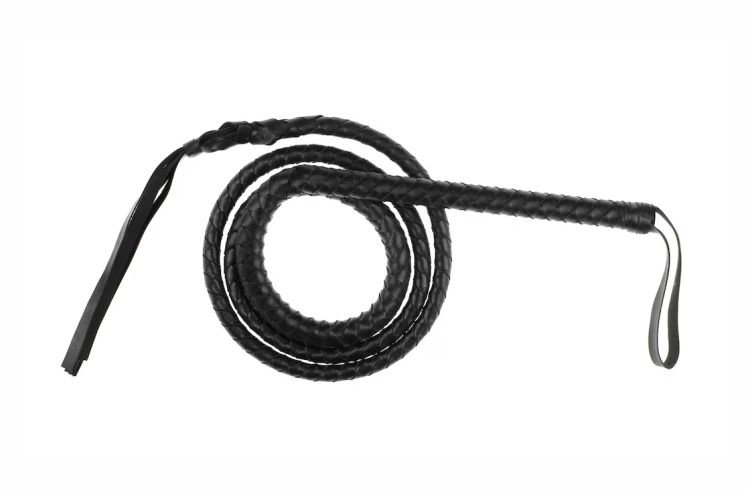
Bullwhips have a rigid handle and a long, tapering thong, and they are what most people picture when they hear the word whip.
Their length demands plenty of space and precise footwork, so bullwhips appear mostly in performance or very experienced hands.
Indoors, a long bullwhip can snag light fixtures or rebound unpredictably off walls.
Stockwhips
Stockwhips come from Australian cattle work, with a separate flexible thong joined to a long stock by a keeper.
They crack loudly and are a favorite with whip-cracking performers, though their length and weight make them a poor fit for bedroom play.
Cat o’ Nine Tails
The cat sits between floggers and single tails, with several braided or knotted tails attached to a short handle.
Its history is grim, since the Science Museum notes that captains could order up to 24 lashes on sailors’ bare backs.
The Royal Navy finally suspended its use in 1879, though it had fallen out of favor long before that date.
Anatomy of a Single-Tail Whip
Knowing each part helps you judge quality, spot wear, and see where force concentrates.
- Handle: A rigid section on bullwhips and some signal whips, which gives leverage and control over the throw.
- Thong: The braided, tapering body, usually made from kangaroo leather, cowhide, or nylon paracord.
- Belly: An inner core of layered braids or weighted filler that gives the whip its heft and roll.
- Fall: A single strip of leather or nylon tied to the end of the thong, replaceable as it wears.
- Cracker: A short, disposable piece of string or nylon at the very tip, which is what actually breaks the sound barrier.
The cracker takes the most wear and is designed to be replaced, which protects the fall and thong from damage.
A frayed cracker can shed fibers or leave a ragged cut, so many handlers change crackers before every scene.
Is Whip Play Right for You?
Whips reward patience, but they punish shortcuts more harshly than any other impact tool. Honest answers to a few questions can save a great deal of pain and regret.
- Have you mastered gentler tools? Comfort with multi-tailed flogger basics and shorter, safer riding crops gives you a foundation in aim, distance, and reading a partner.
- Will you practice for weeks first? Most handlers spend many hours hitting targets before touching a person.
- Does your partner accept the risk of marks? Whips can welt, cut, and occasionally scar, even in skilled hands.
- Do you have the space? Single tails need clear room overhead and to the sides, free from lamps, fans, and furniture.
- Can you learn from someone in person? Workshops and mentors catch mistakes that videos never reveal.
If any answer is no, broader tools such as canes, straps and paddles deliver intense sensation with a far gentler learning curve.
Whips are one corner of every impact play option, not the place to begin.
The Real Risks of Whip Play
Whip injuries tend to happen fast, and some cannot be undone, so every handler needs a clear picture of what can go wrong.
- Eye injuries: A supersonic tip can permanently damage an eye, so faces stay well outside the whip’s reach, and onlookers keep their distance.
- Cuts and broken skin: Fast, concentrated strikes can split skin, leaving open wounds that need cleaning and care.
- Bloodborne infection: Whips that draw blood become contaminated, which is why blood play risks apply even when bleeding was never the goal.
- Wraps: A thong that curls around the body lands its fastest section on the ribs, stomach, or breasts.
- Nerve and joint damage: Strikes near the spine, kidneys, or joints can injure structures that sit just under the skin.
- Scarring: Hitting the same patch again and again, or cutting deeply, can leave permanent marks.
Legal risk matters too, particularly for readers living in England and Wales. Under section 71 of the Domestic Abuse Act 2021, consent is no defence when actual bodily harm or worse is inflicted for sexual gratification.
Laws differ by country and state, so check local rules before any play that could leave lasting injury.
A Realistic Learning Path
Nobody becomes a safe whip handler in a weekend, and experienced practitioners describe the journey in months, not hours.
- Learn to crack in open air. Practice basic cracks outdoors, aiming at nothing, until the motion feels smooth and repeatable.
- Hit stationary targets. Strike paper, cardboard, or a cushion at chest height until most throws land within a palm’s width.
- Practice on moving distractions. Have a friend talk or move nearby, so you learn to stay accurate under realistic pressure.
- Take a class or find a mentor. Many munches and clubs host whip workshops where experienced handlers correct your stance.
- Start on yourself or a willing experienced partner. Use only the lightest touches at first, landing on the safest padded areas.
- Build slowly over many scenes. Increase intensity only after dozens of accurate, controlled sessions.
Wear safety glasses during practice, and keep pets, children, and bystanders well away from the practice zone.
Throws Every Whip Handler Practices
Whip throws differ in direction and speed, but each one depends on a smooth motion that ends with the tip landing exactly where you planned.
- Overhand throw: The classic forward throw, with the arm moving from behind the shoulder in a straight line toward the target.
- Sidearm throw: A horizontal throw useful in low-ceilinged rooms, though it raises the risk of wrapping around a body.
- Forward flick or touch: A soft, slow throw that lands the fall gently, producing a tap rather than a strike.
- Figure eight: A continuous pattern alternating sides, which builds rhythm and suits experienced handlers.
- Cracks without contact: Deliberate cracks at a safe distance from a partner add sound and anticipation without any impact.
Start every scene with soft touches, then build gradually, watching skin and body language closely between throws.
Safe Targets and No-Go Zones
Whip strikes belong only on thick, muscular areas, and even those areas tolerate far less force than with paddles or floggers.
- Safer with experience: The fleshy upper back beside the shoulder blades, the buttocks away from the tailbone, and the backs of the thighs.
- Never the head: Keep the face, eyes, ears, and neck completely out of range, even for soft touches.
- Never the core: Avoid the spine, kidneys, lower back, abdomen, breasts, and genitals, where organs and nerves sit close to the skin.
- Never the extremities: Joints, hands, and feet have little padding and injure easily, so whips stay well away from them.
- Never damaged skin: Skip any area that is already broken, bruised, or recently healed, because it splits far more easily.
Keep the receiver facing away when possible, so the face stays protected if they flinch or turn.
Negotiating a Whip Scene
Whip scenes need more negotiation than almost any other impact play, because the stakes are higher and the risks harder to reverse.
Many players use the RACK framework, short for risk-aware consensual kink, to talk honestly about what could go wrong.
- Discuss marks plainly: Agree on welts, bruising, broken skin, and the possibility of scarring, using hard limits on welts as a starting point.
- Confirm informed consent: Make sure both people grasp the risks before agreeing, as informed consent for marks explains.
- Choose clear signals: Pick safe words for edge play plus a hand signal, since whip scenes can be loud.
- Plan first aid: Keep gloves, saline, sterile gauze, and bandages within reach before the first throw.
- Agree on sobriety: Whips and alcohol never mix, because reaction time and judgment matter on both sides.
The intense sensations can draw out powerful reactions, and sadistic and masochistic pleasure helps explain why some people crave this edge.
Grounding every scene in foundations of BDSM practice keeps that edge consensual and safe.
When a Whip Breaks Skin: First Aid and Aftercare
Stop the scene immediately if a strike breaks the skin, and put on gloves before touching any blood.
Mayo Clinic’s first aid advice recommends rinsing minor cuts under running water and washing around the wound with soap.
It also advises skipping hydrogen peroxide and iodine, since both can irritate the wound.
Seek medical care for deep cuts, heavy bleeding, or signs of infection such as spreading redness, warmth, swelling, or drainage.
Emotional aftercare matters just as much after an intense whip scene, especially for the receiver.
Plan quiet time, warmth, water, and reassurance, then reconnect the following evening, as aftercare once marks appear describes.
Choosing and Caring for a Whip
A well-made whip lasts for decades, while a poorly made one throws unpredictably and wears out quickly.
- Kangaroo leather: Thin, strong, and supple, prized by makers for fine braiding and accurate throws.
- Cowhide: Heavier and cheaper than kangaroo, durable but less responsive in fine control.
- Nylon paracord: Weatherproof, washable, and affordable, which suits beginners and outdoor practice.
Condition leather whips occasionally with a quality leather dressing, and never leave them wet or in direct sun.
Replace crackers whenever they fray, and swap falls once they thin or split. Store whips loosely coiled or hanging, away from heat, so the braiding keeps its roll and balance.
Many collectors admire whips as handcrafted objects, an appreciation linked to leather culture and craft.
Conclusion
Those 1920s photographs revealed a tip moving faster than sound, and that single fact should guide every decision about whip play.
Respect the speed by practicing on targets for weeks, learning from experienced handlers in person, and starting with the softest possible touches.
Keep faces, joints, and organs far out of reach, negotiate marks and legal risks openly, and keep first aid supplies close at hand.
When you feel ready to weigh whips against every other impact tool, visit a side-by-side impact comparison and plan your next step slowly together.
Frequently Asked Questions
What is a single-tail whip?
A single tail is a whip with one plaited thong finishing in a fall and cracker. Snake whips, signal whips, and bullwhips are single tails in different lengths.
Are whips safe for beginners?
Whips suit experienced players, because their tips outpace sound and can cut skin or injure eyes. Master floggers and crops first, then train on stationary targets for weeks.
Which whip works best indoors?
Snake and signal whips suit indoor scenes best, because their short length fits ordinary rooms. Long bullwhips and stockwhips need open space, high ceilings, and very experienced handlers.
Does a whip really break the sound barrier?
The crack is a sonic boom made when the cracker exceeds the speed of sound. Physicists confirmed this using high-speed photography during the 1920s, and later modeling agreed.
Disclaimer: This article is for educational and informational purposes only and does not constitute medical, psychological, or therapeutic advice. All content assumes and is intended for consenting adults (18+). This site does not endorse or provide instruction for any non-consensual activity, or any content involving minors. If you are exploring kink, BDSM, or fetish practices, consult reputable educational resources and, where relevant, a licensed sex therapist or medical professional. If you are in crisis or experiencing abuse, contact appropriate local support services immediately.

Morgan Ellis is the author and researcher behind Kink: BDSM and Fetish Chronicles. With years of study into the psychology, research, and lived experience of alternative sexuality, Morgan writes about kink, BDSM, and fetish from an educational, judgment-free perspective — grounded in consent, communication, and safety. Every article on this site reflects a commitment to honest, responsible information for curious and experienced adults alike.