
Last updated on October 17th, 2026 at 02:50 pm
Maya and Jonah’s bargain twelve-piece restraint kit lasted exactly one short evening, before a plastic clip snapped and a scratchy cuff left Maya’s wrist red. Their second purchase cost more, lasted years, and taught them what actually matters in restraints.
Maya and Jonah are invented characters, drawn from buying mistakes that shop staff and educators describe again and again.
Restraints are any tools that limit movement or position during consensual adult play, from soft cuffs and rope to beds, crosses, and full-body sacks.
Choosing wisely means carefully matching each restraint to your experience, your body, and the scene you want.
Ahead, every major restraint type gets compared side by side, with notes on who each one suits best.
A practical buying checklist follows, along with safety rules that apply to every restraint and the consent habits that hold everything together.
Table of Contents
What Counts as a BDSM Restraint?
A restraint is anything that limits how freely a consenting partner can move, from a strap around one wrist to a promise to stay perfectly still.
Physical restraints range from soft fabric cuffs to steel frames, while mental restraints rely on agreed rules and spoken commands.
Restraint sits at the heart of bondage, so this page works alongside the main bondage hub and the wider overview in BDSM fundamentals explained.
Why Restraint Appeals to So Many People
Interest in restraint is common, and research consistently finds that it is compatible with good mental health.
A 2019 scoping review of 60 studies in the Journal of Sex Research found that 40% to 70% of people report BDSM-related fantasies.
Around 20% reported actually practicing BDSM, and the reviewers found practitioners showed no higher rates of mental health or relationship problems.
Practitioners describe the appeal of restraint in personal terms, so treat these accounts as experiential rather than scientific. Some enjoy surrendering control and the deep trust it requires, while others enjoy the careful attention of caring for a restrained partner.
Many also describe a calm, quiet headspace that arrives once struggling stops and the body simply rests in its bonds.

Types of BDSM Restraints
Restraints fall into a handful of families, and the table below gives a quick overview before each type gets its own section.
| Restraint type | Common examples | Skill needed | Release speed |
|---|---|---|---|
| Wrist and ankle cuffs | Velcro, padded leather, metal handcuffs | Low | Fast to moderate |
| Rope and tape | Jute, cotton, bondage tape | Medium | Moderate, shears needed |
| Bed restraint systems | Under-bed straps, over-door cuffs | Low | Fast |
| Bars and connectors | Spreader bars, hogtie straps, clips | Low to medium | Fast with good clips |
| Collars and leashes | Leather collars, posture collars | Low | Fast |
| Full-body restraints | Sleep sacks, straitjackets, body bags | Medium | Slow |
| Furniture | Crosses, benches, stocks, tables, chairs | Medium | Moderate |
| Specialty restraints | Mitts, hoods, thumb cuffs, armbinders | Medium to high | Varies |
| Mental restraints | Orders, positions held by agreement | Low | Instant |
Wrist and Ankle Cuffs

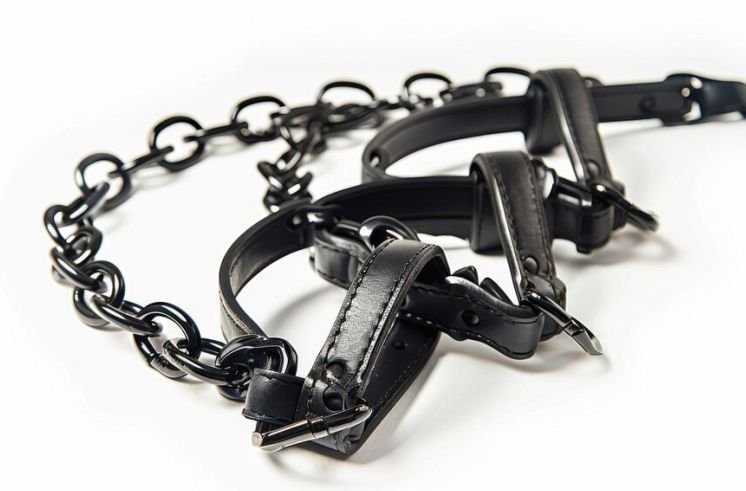
Cuffs are the most popular first restraint, because they need no skill and come in soft, padded, and metal versions.
Our detailed comparison of leather cuffs, handcuffs and shackles covers fit, locks, and nerve safety, so this section stays brief.
Rope and Tape
Rope offers endless variety and a beautiful look, yet it demands real skill to tie safely and quickly. Start with our notes on rope types and safe ties, or try reusable PVC restraint tape, which clings only to itself and needs no knots.
Under-Bed and Over-Door Systems
Under-bed systems run straps beneath the mattress with a cuff at each corner, turning any bed into a restraint frame within minutes.
Over-door systems hook a padded anchor over the top of a closed door, holding wrists overhead without permanent fixtures.
Both suit beginners well, since they need no hardware installation, store away easily, and release quickly when clips face upward.
Spreader Bars and Connectors
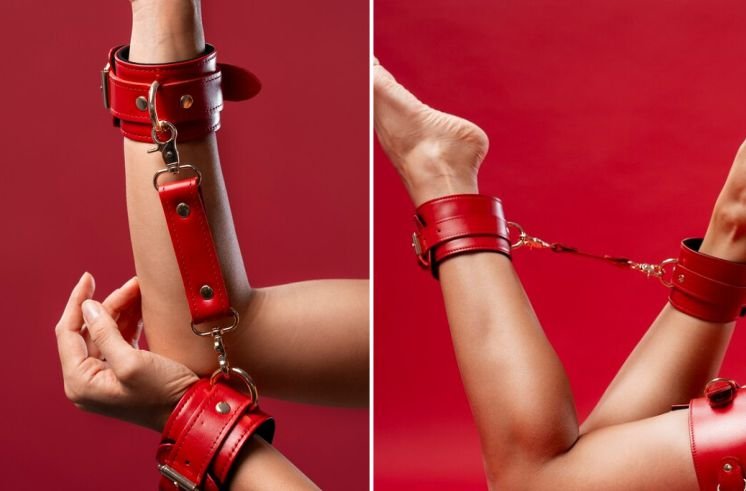
Spreader bars hold wrists or ankles apart at a fixed distance, while connectors link cuffs to each other or to furniture.
Our page on adjustable spreader bars explains lengths and positions, and our notes on linking wrists to ankles cover the breathing risks of face-down connections.
Collars and Leashes
Collars carry strong symbolic meaning in many dynamics, yet they sit over sensitive structures in the neck that deserve real respect.
Pressure on the carotid sinus can slow the heart or drop blood pressure, and Patient.info’s clinical overview lists tight collars among the known triggers in susceptible people.
Fit any collar loosely enough to slide two fingers underneath, and never tie a collar or leash to anything that could pull tight.
Full-Body Restraints
Sleep sacks, straitjackets, and body bags enclose much of the body, which creates an intense feeling of helplessness and also traps heat.

The CDC’s workplace heat guidance notes that enclosing protective clothing reduces the body’s ability to shed heat through sweating, and the same principle applies here.
Keep full-body sessions short in a cool room, offer water before and after, and stay within arm’s reach throughout.
Vacuum beds, which pull latex sheets tight around the body with a vacuum pump, carry the highest breathing and panic risks of any restraint.
Many experienced players avoid them entirely, and anyone considering one should seek supervised instruction first.
Furniture: Crosses, Benches, Stocks and Chairs

Restraint furniture holds the body in a stable position, which reduces strain compared with standing or kneeling unsupported.
Common pieces include Saint Andrew’s crosses, spanking benches, stocks, bondage chairs, and padded bondage tables and benches with anchor points along every edge.
Anyone planning a dedicated room will find more ideas in our piece on furnishing a play space.
Mitts, Hoods and Specialty Restraints
Bondage mitts enclose the hands in padded pouches, removing the ability to grip, and they feature heavily in pet play mitts and hoods scenes.
Hoods restrict sight and sometimes hearing, so choose designs with large nose and mouth openings, as covered in hoods, blindfolds and senses.
Thumb cuffs and armbinders concentrate pressure on small joints and the shoulders, so treat them as advanced tools for short periods only.
Chastity Devices
Chastity devices restrict access to the genitals rather than limiting movement, so many players treat them as a long-term form of restraint.
Fit, hygiene, and wearing time matter enormously, and our piece on chastity devices as restraints explains sizing, materials, and safe wearing schedules.
Mental Restraint: Orders and Protocol
Some of the most powerful restraint uses no equipment at all, relying instead on an agreed command to hold still or keep a position.
This kind of mental bondage and orders asks for discipline and trust, and it releases instantly when either partner calls a stop.
How to Choose the Right Restraints
Start with your experience level, because beginners do best with restraints that open quickly and need no special skills.
Velcro cuffs, padded leather cuffs, and under-bed systems are the usual first purchases, while rope, furniture, and full-body restraints come later.
Think about your body as well, choosing wide, padded bands for sensitive skin and avoiding metal if you react to nickel.
Finally, match the restraint to the scene, since a brief playful moment calls for different gear than a long, intense session.
Restraint Buying Guide
Maya and Jonah’s broken kit shows why price alone is a poor guide, since cheap restraints tend to fail exactly when you rely on them.
- Closures: Choose buckles, quick-release snaps, or sturdy clips, and avoid flimsy plastic clips that can snap under tension.
- Materials: Prefer lined leather, nylon webbing, or medical-grade silicone, and be wary of strong-smelling soft plastics.
- Sizing: Check the adjustment range against your wrist, ankle, or neck measurements before buying, especially for collars and shackles.
- Kits versus single pieces: Large kits look like good value, yet buying two quality cuffs and one bed system usually serves better.
- Sellers: Buy from retailers who list materials clearly, offer return policies, and ship in plain, discreet packaging.
Material quality matters for skin health as well as durability, especially with cheap restraints.
A Danish environmental agency survey found plasticizer content as high as 70% in some soft vinyl sex products, so lined leather or silicone is a safer choice for skin contact.
For tools beyond restraints, browse the wider kink toolkit before planning bigger purchases.
Safety Rules for Every Restraint
These rules apply whatever restraint you choose, from a silk scarf to a steel frame.
- Never leave a restrained person alone, even briefly, and keep safety shears within reach for every scene.
- Check fingers and toes every few minutes for coldness, color changes, tingling, or numbness, and release at once if anything changes.
- Keep anything that could tighten away from the neck, and never let restraints bear body weight.
- Avoid restraint play after alcohol or drugs, and take extra care with breathing whenever restraints combine with gags, muzzles and harnesses.
- Plan the release order before the scene starts, so every buckle and clip can open within seconds.
Consent, Signals and Aftercare
Agree on limits, time frames, and health concerns beforehand, and consider using a negotiation and limits checklist to record them.
Pair spoken words with gestures, as described in safe words for restraint play, because restraints and gags can make speaking difficult.
Once the scene ends, plan aftercare once restraints come off, including gentle stretching, water, and time to talk about what worked.
Conclusion
Maya and Jonah still own one piece from that failed kit, a blindfold, and everything else in their drawer now comes with sturdy buckles.
Their lesson applies to every restraint, since comfort, quick release, and honest communication matter more than how many pieces arrive in the box.
Start simple with cuffs or a bed system, add rope or furniture as skills grow, and keep neck, breathing, and circulation checks at the center of every scene.
This week, measure your wrists, pick one quality restraint, and plan your release order together.
Frequently Asked Questions
What are the main types of BDSM restraints?
The main types include cuffs, rope and tape, bed restraint systems, spreader bars, collars, full-body sacks, restraint furniture, specialty items like mitts and hoods, and simple mental restraint.
What restraints are best for beginners?
Padded leather or Velcro cuffs and under-bed restraint systems suit beginners, because they need no special skills, distribute pressure well, and release within seconds when anything feels wrong.
Are restraint kits worth buying?
Large kits look like good value, yet many include flimsy clips and scratchy cuffs, so buying a few quality pieces separately usually gives safer, longer-lasting results for couples.
How do you use restraints safely?
Never leave a restrained partner alone, keep shears nearby, check circulation frequently, keep anything tight away from the neck, and agree on clear signals that work without words.
Disclaimer: This article is for educational and informational purposes only and does not constitute medical, psychological, or therapeutic advice. All content assumes and is intended for consenting adults (18+). This site does not endorse or provide instruction for any non-consensual activity, or any content involving minors. If you are exploring kink, BDSM, or fetish practices, consult reputable educational resources and, where relevant, a licensed sex therapist or medical professional. If you are in crisis or experiencing abuse, contact appropriate local support services immediately.

Morgan Ellis is the author and researcher behind Kink: BDSM and Fetish Chronicles. With years of study into the psychology, research, and lived experience of alternative sexuality, Morgan writes about kink, BDSM, and fetish from an educational, judgment-free perspective — grounded in consent, communication, and safety. Every article on this site reflects a commitment to honest, responsible information for curious and experienced adults alike.