
Last updated on October 21st, 2026 at 06:49 am
Hana’s bullhide flogger looked gorgeous on the bedroom hook, but its first sweeping stroke curled past Luca’s shoulder and slapped his ribs. They both froze for a moment, then agreed the flogger deserved more practice than its hefty price tag.
Hana and Luca are a couple, illustrating the most common flogging mistake, which experienced players call wrapping.
A flogger looks simple, yet its falls behave like a loose bundle of ropes that keeps moving after your arm stops.
Learning to control that movement turns a clumsy swing into a rhythm that feels like a deep massage or a bright, tingling sting.
We will talk about flogger anatomy, materials, and how floggers differ from whips.
You will also learn how to hold one, which strokes to practice first, where to aim, and how to clean your flogger afterward.
Table of Contents
What Is a Flogger?
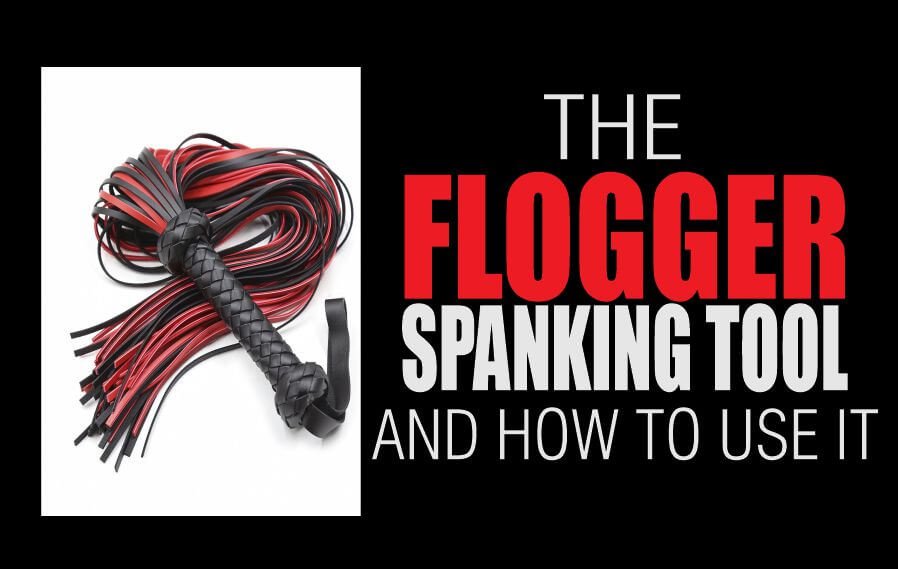
A flogger is an impact toy made of a handle with many strips of material, called falls or tails, attached at one end.
When swung, the falls spread across the skin together, delivering anything from a soothing thud to a stinging, tingling sensation.
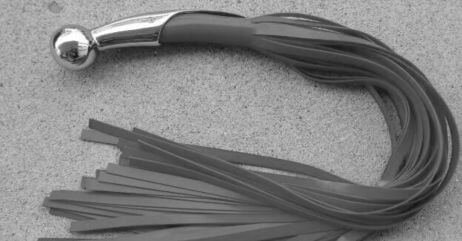
Floggers sit in the middle of the impact range, gentler than canes or single-tail whips but more intense than most hand spanking.
They belong to the larger family covered in the broader impact play family, alongside paddles, crops, and straps.
People enjoy floggers for the sensation itself, the hypnotic rhythm, and the power exchange that a scene creates.
Many receivers describe a steady flogging rhythm as deeply relaxing, while givers enjoy the skill and concentration of controlling the falls.
If BDSM is new to you, BDSM explained from scratch covers the consent principles that sit underneath every scene.
Flogger Anatomy: Handle, Falls and Balance
Knowing the parts of a flogger helps you compare designs and predict how one will feel before you buy it.
- Handle: The grip you hold, usually wrapped in leather, which should feel secure without forcing a tight squeeze.
- Falls: The strips that strike the skin, varying in number, length, width, thickness, and material.
- Transition or knot: The point where falls join the handle, sometimes covered by a braided knot or metal cap.
- Pommel: A weighted end or knob that stops the handle slipping and changes the balance of the whole tool.
- Wrist loop: A strap on some handles, which is better left off your wrist so you can drop the flogger quickly.
Balance matters more than weight alone, because a flogger that balances near the handle feels lighter and easier to control.
A flogger that pulls toward the falls generates more momentum, which suits experienced players who want heavier, deeper strikes.
BDSM Flogger vs Whip vs Cat o’ Nine Tails
Floggers, whips, and cats are frequently confused, but they deliver very different sensations and carry different risks.
| Tool | Structure | Sensation | Skill needed |
|---|---|---|---|
| Flogger | Handle with many flat or round falls | Thud to moderate sting, spread widely | Low to moderate |
| Cat o’ nine tails | Handle with several knotted or braided tails | Sharp, biting sting with marks | Moderate to high |
| Single-tail whip | One long braided body ending in a thin fall | Cutting, concentrated sting | High |
A whip concentrates all its energy into one narrow tip, which is why how whips differ from floggers matters before anyone upgrades.
Floggers spread the same energy across many falls, so they forgive small errors in aim and force far better than whips.
How Common Is Flogging in BDSM, and Why Does It Feel Good?
Exact figures for flogging alone are scarce, but national surveys offer a rough picture of how many adults practice BDSM.
A national Australian survey of about 20,000 people found 2% of men and 1.4% of women had engaged in BDSM in the past year.
Those figures appear in NCSF’s summary of the survey, published by the National Coalition for Sexual Freedom.
The same survey found BDSM participants were no more likely to report abuse, coercion, or anxiety than other Australians.
Research on why consensual impact feels rewarding is still limited and should be read as preliminary.
In a study of 58 practitioners, Sagarin and colleagues found that people whose scenes went well showed reduced physiological stress and greater relationship closeness afterward.
Many players also describe a calm, floaty state during long rhythmic flogging, which the psychology of sadomasochism discusses in more depth.
Types of Floggers by Material
Material has the biggest influence on how a flogger feels, how heavy it is, and how easily it cleans.
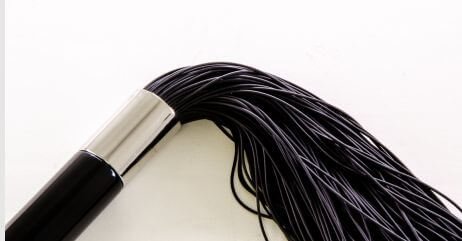
Suede Floggers
Suede floggers have soft, napped falls that create a gentle, thuddy sensation ideal for warm-ups and first scenes.
They rarely leave marks at moderate force, which makes them the classic starter flogger for nervous partners.
Suede absorbs sweat and fluids readily, so it needs careful spot cleaning and works best with one partner.
Soft Leather Floggers (Deerskin, Elk and Lambskin)
Deerskin, elk, and lambskin floggers feel supple and heavy, producing a rich, enveloping thud that many players adore.
Their soft falls drape beautifully and suit slow, sensual strokes as well as firmer, rhythmic patterns.
These leathers sit comfortably between suede and stiffer hides, so they suit beginners ready for slightly more intensity.
Stiff Leather Floggers (Cowhide, Latigo and Bullhide)
Cowhide, latigo, and bullhide floggers have firmer, denser falls that deliver deeper thud and noticeably more sting.
Bullhide in particular is heavy and unforgiving, which is exactly why Hana’s first stroke wrapped so painfully.
These floggers suit experienced players who already control distance and aim, not partners learning their first strokes.
Some people react to chemicals used in tanning, and DermNet notes chrome-tanned leather as a source of chromium allergy, recommending vegetable-tanned alternatives.
Rubber and Silicone Floggers
Rubber and silicone floggers have dense, heavy falls that deliver a sharp, biting sting with plenty of thud underneath.
They are non-porous, which makes them easier to wash and disinfect than leather or suede.
Thin rubber falls sting intensely and mark quickly, so start with very light strokes and short sessions.
Vinyl and PVC Floggers
Vinyl and PVC floggers are inexpensive, shiny, and easy to wipe clean, making them a practical budget choice.
Their falls tend to feel stingier than leather of similar size, and cheap versions can develop sharp edges along cut seams.
Horsehair and Synthetic Hair Floggers
Horsehair floggers have hundreds of fine strands that create a light, tickling sting, especially when dragged slowly across the skin.
Synthetic hair versions mimic this feel while resisting moisture, and both work beautifully for teasing within blending floggers with sensation play.
Rope Floggers
Rope floggers use braided or twisted cord falls, sometimes knotted at the ends, which concentrate force into small points.
Unknotted soft rope feels thuddy, while knotted or thin cord stings sharply and can raise welts quickly.
Chain Floggers
Chain floggers use metal links instead of soft falls, producing heavy, cold, and very intense impact.
They can bruise deeply, break skin, or injure bone if aimed poorly, so they belong only in experienced, carefully negotiated scenes.
Fall Count, Width, Length and Weight
Beyond material, four design choices decide how far a flogger leans toward thud or sting.
- Number of falls: More falls spread force over a wider area and feel thuddier, while fewer falls concentrate force and sting more.
- Width of falls: Wide, flat falls thud and drape, while narrow or round falls cut into the skin and sting.
- Length of falls: Short falls suit close, controlled play in small rooms, while long falls need more space but build greater speed.
- Weight: Heavier floggers carry more momentum, so they hit harder with less effort and tire the wrist faster.
A good first flogger has many wide, soft falls of moderate length, which forgives mistakes in aim and timing.
Comparing several options against the full list of implements helps you see where floggers sit among paddles, straps, and canes.
How to Choose Your First BDSM Flogger
Hana and Luca replaced their bullhide flogger with a soft deerskin model, and their next session felt completely different.
These six questions help you avoid buying the wrong flogger for your first scenes.
- What sensation do you both want? Choose suede or soft leather for thud, and rubber or narrow falls for sting.
- How much space do you have? Measure your room, because long falls need clearance from walls, ceilings, and lamps.
- Does the handle fit your hand? A handle that feels too thick or too slippery makes control much harder.
- Can you clean it easily? Choose non-porous rubber or silicone if you play with more than one partner.
- Is the craftsmanship sound? Check that falls are evenly cut, firmly attached, and free from rough or sharp edges.
- Do you have allergies? Ask about tanning methods, latex content, and dyes before buying for sensitive skin.
How to Hold a Flogger

A relaxed, secure grip gives you control and protects your wrist during longer scenes.
Hold the handle firmly near the transition, with your thumb resting along the top for steering.
Avoid gripping too tightly, because a clenched hand stiffens the wrist and makes strokes jerky and less accurate.
Before each stroke, many players gather the falls loosely in their free hand, then release them as the swing begins.
This simple habit prevents tangles, stops falls flopping forward unexpectedly, and lets you place the first stroke precisely.
Leave any wrist loop off your wrist, so you can drop the flogger instantly if the receiver calls a stop.
Basic Flogging Strokes to Practice
Practice every stroke on a pillow, couch cushion, or hanging target before trying it on a partner.
Hana and Luca hung a pillow from a door hook and practiced for a week before their next scene.
- The drag or caress: Draw the falls slowly across the skin without striking, a calming way to begin and end any scene.
- The downward stroke: Swing straight down from the elbow so the falls land flat, delivering a simple, controllable thud.
- Forehand and backhand diagonals: Swing across the body from one side, then return from the other, creating a steady rhythm.
- The figure eight: Trace a sideways eight with your wrist, so the flogger strikes alternately on each side without stopping.
- Florentine flogging: Use two floggers at once in alternating circles, an advanced technique that demands strong coordination and space.
- Flicks: Use quick wrist snaps so only the tips of the falls land, producing a lighter, stingier sensation.
Each stroke works best when the falls land flat across the target, rather than tip-first or edge-first.
Tip strikes concentrate force into tiny points, which hurts more than intended and can break skin.
Where to Flog: Safe and Unsafe Areas
Aim only for well-padded, muscular areas, and keep strikes away from bone, joints, and organs.
| Safer areas | Areas to avoid |
|---|---|
| Upper back muscles beside the shoulder blades | Spine and neck |
| Buttocks, especially the lower curve | Kidneys and lower back |
| Back of the thighs | Face, eyes, and ears |
| Outer upper arms, lightly | Joints, including knees and elbows |
| Chest muscles, lightly, with experience | Abdomen, ribs, and breasts with heavy strokes |
The kidneys sit just below the ribs on either side of the spine, so strokes on the lower back can cause real injury.
Eyes are especially vulnerable to fast-moving falls, and health.gov notes that 90% of sports eye injuries are preventable with simple precautions.
Keep the face completely out of range, and consider a blindfold if the receiver might turn toward the flogger.
Wrapping and How to Prevent It
Wrapping happens when the falls extend past the target and curl around onto the ribs, hips, or stomach.
Those wrapped tips move fastest and land on unpadded skin, which is why wraps sting sharply and sometimes bruise.
Hana’s stroke that slapped Luca’s ribs came from standing too close and swinging horizontally around his body.
- Check your distance: Stand so the tips land on the target itself, never beyond its far edge.
- Swing downward or diagonally: Horizontal strokes are more likely to curl around the torso.
- Watch the tips: If tips land on the far side of the body, step back slightly.
- Practice the arc: Use a pillow to learn exactly where your falls finish their swing.
How to Set Up a Flogging Scene
Good flogging scenes begin long before the first stroke, with clear conversation about limits, intensity, and marks.
Agree on pausing with a safe word and a simple number scale, so the receiver can adjust intensity without stopping entirely.
- Choose a position: The receiver can stand facing a wall, lie face down, or kneel over a padded surface.
- Consider restraint carefully: Standing at a cross with wrist cuffs for cross play adds intensity, but quick-release options are vital.
- Warm up slowly: Begin with drags and light thuds, borrowing ideas from spanking warm-up techniques.
- Build gradually: Increase force and speed in stages, watching breathing, posture, and skin color.
- Vary the rhythm: Mix steady patterns with pauses, caresses, and changes in direction to keep sensation interesting.
- Check in between sets: Ask simple questions during short pauses, and respect every slowdown or stop.
Givers and receivers both carry responsibility in a scene, and the dominant partner’s role includes reading body language closely.
Receivers can drift into a deep, quiet state during long flogging, which the submissive headspace describes, so givers should check in even when everything seems calm.
Common Flogging Mistakes
- Standing too close: This causes wrapping, which sends the fastest part of the falls onto unpadded skin.
- Skipping practice: Untested strokes miss their target, and a pillow costs nothing to practice on.
- Starting too hard: Heavy strokes without a warm-up feel harsh and can bruise quickly.
- Ignoring room space: Falls catch on lamps, ceiling fans, and furniture, which can rebound unpredictably.
- Choosing the wrong first flogger: Heavy bullhide or thin rubber punishes small mistakes in aim and force.
- Forgetting the giver’s body: Long scenes strain the shoulder and wrist, so switch arms and rest regularly.
Aftercare After Flogging
Flogging releases strong physical and emotional sensations, so plan care for both partners once the scene ends.
Offer water, a blanket, and quiet closeness, then check the skin for welts, broken skin, or unusual bruising.
Gentle lotion soothes warm, flushed skin, and post-flogging aftercare routines include emotional check-ins the following day.
Cleaning and Storing Floggers
Clean floggers after every scene, following the specific care needs of each material below.
- Suede and soft leather: Wipe gently with a damp cloth and leather cleaner, then hang to air dry.
- Stiff leather: Clean with leather cleaner and condition every few months to prevent cracking.
- Rubber and silicone: Wash with soap and warm water, then disinfect with a toy-safe cleaner.
- Horsehair: Brush gently, wash with mild shampoo, and dry fully before storage.
- Chain: Wash, disinfect, and dry the links thoroughly to prevent rust and pitting.
Store floggers hanging by the handle, so the falls hang straight and do not kink or tangle.
Keep them away from direct sunlight, heat, and damp, which can fade, crack, or warp materials.
Any porous flogger that draws blood should stay with one partner, because leather and suede cannot be fully sanitized.
Many leather lovers treat their floggers as treasured objects, a pull that why leather excites people helps explain.
Conclusion
Hana and Luca still own the bullhide flogger, but it hangs untouched until Hana can land every stroke exactly where she aims.
Their soft deerskin flogger now opens every scene with slow drags, steady thuds, and frequent, gentle check-ins between sets.
Choose a forgiving first flogger, practice on a pillow, and keep every stroke on padded muscle.
Stand far enough back to prevent wrapping, clean your falls carefully, and finish with gentle aftercare.
When you crave a sharper sensation, read about the riding crop’s precision before choosing your next toy.
Frequently Asked Questions
What is a flogger in BDSM?
A flogger is an impact toy with a handle and many falls at one end. Swung across padded skin, it delivers sensations from soothing thud to bright sting.
What is the difference between a flogger and a whip?
A flogger has many falls that spread force widely, which forgives beginner mistakes. A whip has one tail that concentrates force into a narrow tip, demanding more skill.
Does flogging hurt?
Flogging hurts as much as partners choose, depending on material, force, and speed. Soft suede strokes can feel like a massage, while heavy rubber or bullhide stings intensely.
What is the best flogger for beginners?
Suede or soft deerskin floggers with many wide, supple falls suit beginners best. They thud gently, rarely mark, and forgive small mistakes in aim, distance, timing, and force.
Disclaimer: This article is for educational and informational purposes only and does not constitute medical, psychological, or therapeutic advice. All content assumes and is intended for consenting adults (18+). This site does not endorse or provide instruction for any non-consensual activity, or any content involving minors. If you are exploring kink, BDSM, or fetish practices, consult reputable educational resources and, where relevant, a licensed sex therapist or medical professional. If you are in crisis or experiencing abuse, contact appropriate local support services immediately.

Morgan Ellis is the author and researcher behind Kink: BDSM and Fetish Chronicles. With years of study into the psychology, research, and lived experience of alternative sexuality, Morgan writes about kink, BDSM, and fetish from an educational, judgment-free perspective — grounded in consent, communication, and safety. Every article on this site reflects a commitment to honest, responsible information for curious and experienced adults alike.