

Last updated on October 21st, 2026 at 06:48 am
Sam’s first toy was a heavy oak paddle, chosen because it looked serious in the shop photo. One firm swat left Aisha with a plum-colored bruise that lingered for twelve days, and both of them felt they had skipped steps.
Sam and Aisha mirror a mistake many newcomers make when they buy their first impact toy.
Choosing spanking tools gets easier once you know how weight, surface area, and flexibility change the feel of each swat.
Below you will find 32 implements, from bare hands and leather paddles to canes, straps, floggers, and household items.
Each entry covers how it feels, who it suits, and what can go wrong.
In this post, we compare materials, explain safe use, and show you how to clean, inspect, and safely store every tool properly so it lasts for years.
Table of Contents
How Spanking Tools Feel: Thud Versus Sting
Every spanking tool sits somewhere on a scale between thud and sting, and knowing where helps you buy wisely.
Thuddy tools spread force across a wide area, so the sensation feels deep, heavy, and closer to a massage at low intensity.
Stingy tools concentrate force on a narrow strip, so the sensation stays near the surface and feels sharp, hot, and bright.
Three simple physical factors decide where any implement lands on that thud-to-sting scale.
- Surface area: A broad paddle spreads energy across more skin, while a thin cane delivers the same energy to a narrow line.
- Weight: Heavier tools carry more momentum, so a dense wooden paddle hits harder than a light leather one at the same speed.
- Flexibility: Flexible tools snap and sting at the tip, while rigid tools transfer force straight into the muscle beneath.
Pain preferences vary widely between people, and the reasons some partners enjoy intense sensation are covered in why some people crave pain.
Interest is far from rare, since 19% of adults in a Quebec survey of 1,040 people reported masochistic desires or experiences, as GoodTherapy’s summary of the research explains.
Spanking tools are one branch of a larger practice, and our impact play hub shows how they connect with floggers, whips, and other gear.
| Tool family | Main sensation | Beginner friendly? | Mark risk |
|---|---|---|---|
| Hands and gloves | Thud, warm | Yes | Low |
| Leather and silicone paddles | Thud with light sting | Yes | Low to moderate |
| Wooden and acrylic paddles | Heavy thud or sharp slap | With care | Moderate to high |
| Straps, belts and tawses | Broad sting | Intermediate | Moderate |
| Canes | Intense, linear sting | No | High |
| Suede and leather floggers | Thud to light sting | Yes | Low |
| Crops | Precise, small sting | Yes, lightly | Low to moderate |
| Whips | Sharp, cutting sting | No | High |
| Household items | Varies | With care | Varies |
Best Spanking Toys for Beginners
A sensible starter kit covers a range of sensations without the high risk of canes or single-tail whips.
Sam and Aisha rebuilt their collection around five forgiving tools, and their second attempt felt playful rather than punishing.
- Your hands: The best teacher, because the spanker feels exactly how hard each swat lands.
- A leather paddle: Broad and forgiving, with a satisfying sound and gentle sting at moderate force.
- A silicone paddle: Body-safe, easy to clean, and flexible enough to deliver a playful snap.
- A suede flogger: Soft tails create a thuddy, rhythmic warm-up that suits nervous first-timers.
- A short riding crop: Light taps teach precision, though force should stay low until both partners know the sensation.
Before any tool touches a partner, review hand spanking basics and positions, including the safe target zones.
Then test every new implement on your own thigh, starting softly, so you feel the difference between a tap and a real swat.
Hands and Gloves
1. Bare Hand
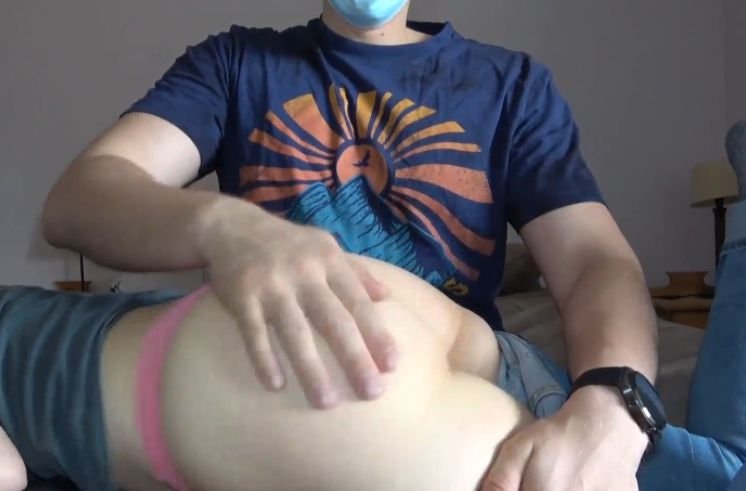
The bare hand remains the most intimate spanking tool, because skin meets skin and the spanker feels every impact directly.
A cupped palm makes a loud, thuddy pop, while a flat palm stings more and spreads across the cheek.
Hands also tire and sting the spanker, which naturally limits intensity during a first scene.
2. Spanking Gloves
Spanking gloves change the texture of hand play without losing the feedback that makes hands so useful for beginners.
Smooth leather gloves add sting and protect the spanker’s palm, while fur or faux-fur gloves allow soothing strokes between swats.
Studded or spiked gloves are far more intense and should wait until partners have discussed limits and skin marks carefully.
BDSM Paddle Types
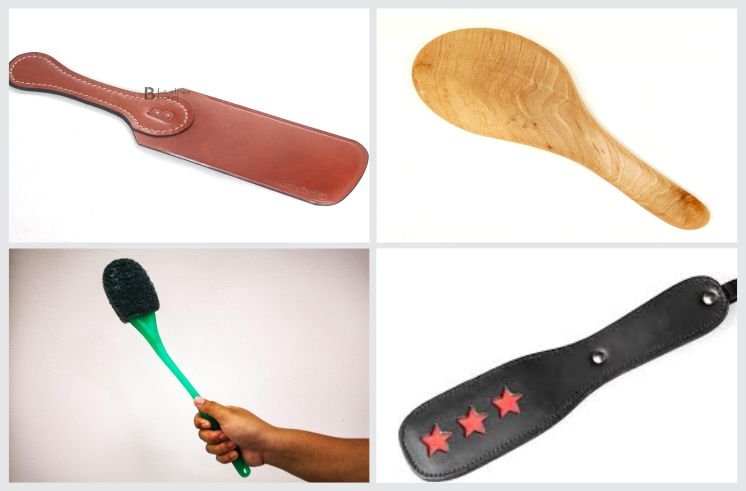
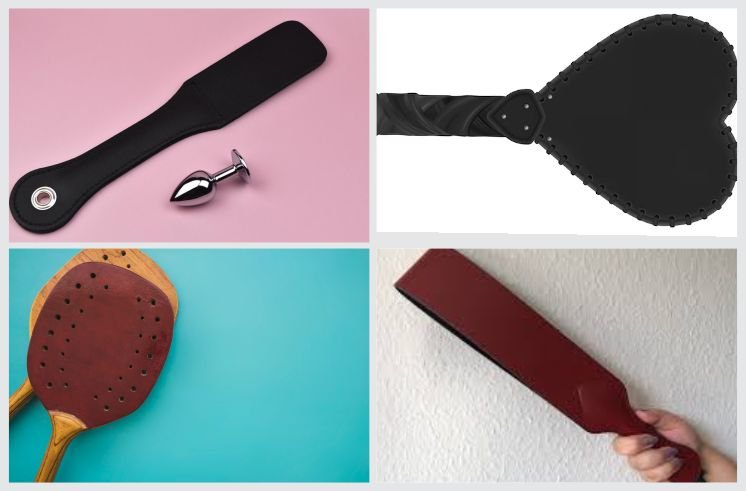
Paddles rank among the most popular spanking implements after hands, because their broad faces spread force and keep strikes predictable.
Material, thickness, and size decide how a paddle feels, so two paddles that look alike can produce completely different sensations.
3. Leather Paddles
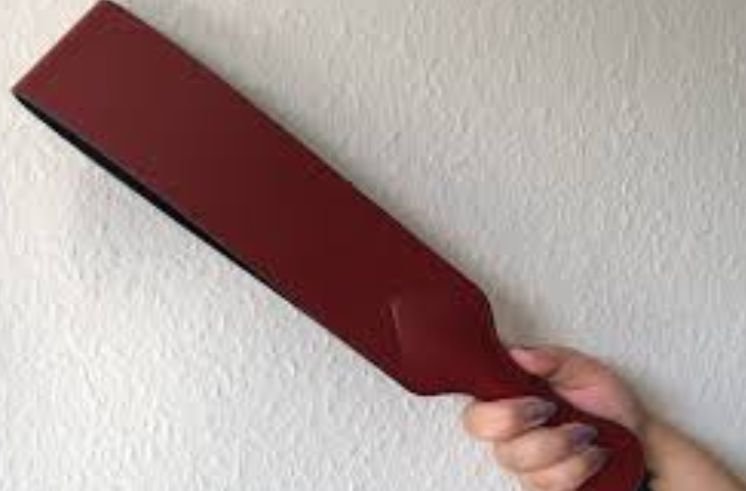
Leather paddles are the classic beginner choice, delivering a satisfying slap with moderate sting and a forgiving amount of flex.
Thicker, layered leather feels thuddier, while a thin single layer stings more and warms the skin quickly.
Many people also enjoy the smell and feel of the material, a pull discussed in the appeal of leather.
4. Wooden Paddles

Wooden paddles are dense and heavy, so they deliver deep, thuddy impact that reaches the muscle rather than the skin.
This weight is exactly what caught Sam out, since a rigid hardwood paddle bruises quickly at force a beginner considers gentle.
Use wood only after a long warm-up, swing from the elbow rather than the shoulder, and check the surface for splinters before every scene.
Holes drilled through some wooden paddles reduce air resistance and increase sting, so treat them as a step up in intensity.
5. Silicone Paddles
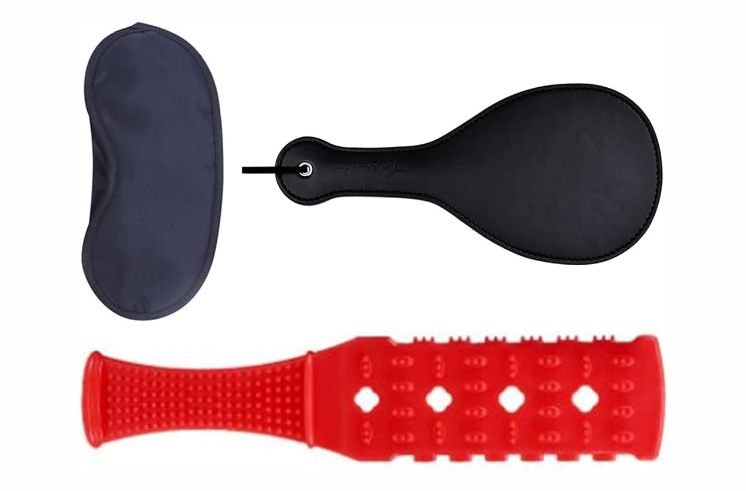
Silicone paddles combine flexibility with a body-safe, non-porous surface that cleans easily with soap and warm water.
They produce a sharp, snappy sting that builds rapidly, and their soft edges are kinder than hard plastic.
Silicone suits beginners and experienced players alike, though thick, heavy versions hit harder than their friendly appearance suggests.
6. Rubber Paddles

Rubber paddles deliver a quick, intense snap that lingers on the skin longer than leather at similar force.
Their grip on the skin intensifies sting, so start far lighter than you would with leather.
Natural rubber can trigger latex allergies, which makes checking the material before buying a sensible habit for both partners.
7. Fur-Lined and Two-Sided Paddles
Two-sided paddles pair a soft fur or fleece face with a firmer leather or vinyl side for contrast.
The spanker can alternate between soothing strokes and stingy swats, which suits playful scenes and slower warm-ups.
Fur sheds and absorbs fluids, so these paddles need gentle spot cleaning rather than soaking.
8. Acrylic and Plastic Paddles
Acrylic paddles are rigid, lightweight, and smooth, producing a sharp slap and loud crack that many people find dramatic.
Their stiffness concentrates force at the edges, so angle every swat flat to avoid painful edge strikes.
Acrylic is non-porous and wipes clean easily, but cheap plastic can crack and leave sharp fragments behind.
9. Studded and Textured Paddles
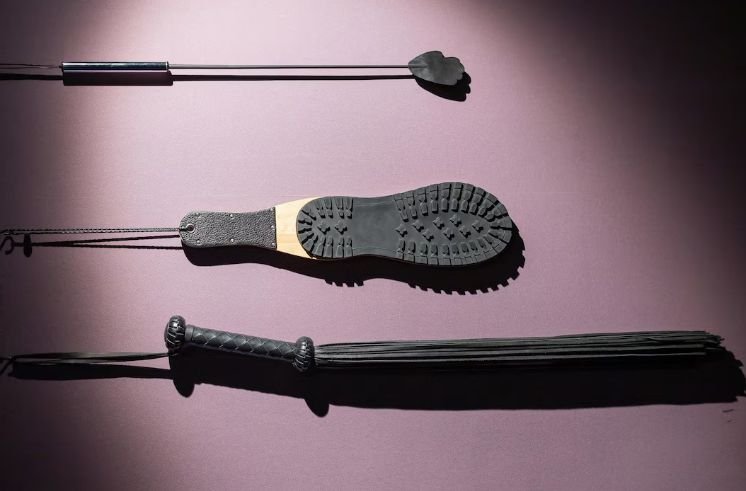
Studded paddles carry raised rivets, spikes, or patterns that create pressure points and leave textured marks on the skin.
Even light swats feel intense, and strong strikes can puncture or tear skin when studs are sharp.
Reserve these paddles for experienced partners who have agreed on marks, and inspect studs for loose or jagged edges.
10. Slapper Paddles
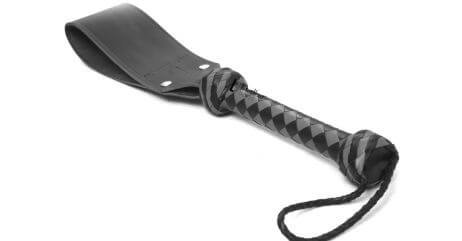
Slappers are made of two strips of leather stitched at the handle, which snap together on impact.
The result is a loud, theatrical crack with surprisingly little pain, making slappers ideal for noisy, playful scenes.
Sound has real psychological power in spanking, so slappers suit partners who love anticipation more than intense sting.
Straps, Belts and Tawses
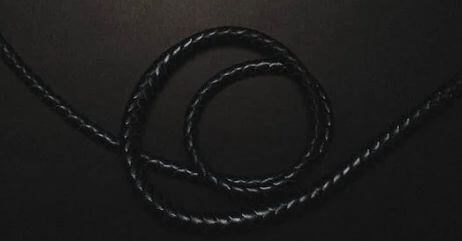
Straps are long, flexible strips of leather that wrap slightly around the curve of the buttocks on impact.
That wrapping action spreads sting broadly, but it also lets the tip curl around onto the hips or sides.
11. Leather Belts
A leather belt is the most familiar strap, folded in half to shorten its length and increase control.
Always hold the buckle end inside your hand, because a swinging metal buckle can cut skin or chip teeth.
Belts carry strong emotional associations for some people, so discuss any history with physical discipline before using one.
12. Prison Straps
Prison straps are thick, heavy leather straps with a sturdy handle, designed for intense, broad impact.
They hit hard even at moderate speed, so they belong in the toolkits of experienced players rather than beginners.
Many players reserve them for discipline scenes with rules, where intensity and protocol have been agreed in advance.
13. Tawses
A tawse is a leather strap split into two or three tails at the striking end, historically used in Scottish schools.
The split tails spread the strike and add a biting sting that feels sharper than a plain strap.
Aim flat and centered, because split tails can wrap and nip sensitive skin on the hips.
Canes: Precise and Intense
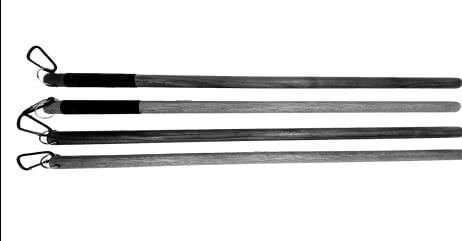
Canes deliver the most concentrated sting of any common spanking tool, because all their energy lands along one thin line.
They raise welts quickly, can break skin, and demand accuracy, so canes belong at the end of a learning curve, not the start.
Practice on a pillow until you can land strikes exactly where you aim, then begin with light taps on a warmed-up partner.
14. Rattan Canes
Rattan is the traditional caning material, flexible and springy, with a sting that blooms a second after impact.
Thicker rattan feels thuddier, while thin rattan stings sharply and marks quickly.
Check rattan for cracks and fraying ends, because a split cane can splinter into the skin.
15. Bamboo Canes
Bamboo canes are light and inexpensive, but their natural knots and hollow structure make them less predictable than rattan.
They can split along the grain with little warning, leaving sharp edges, so replace any bamboo cane that shows cracks.
Bamboo works best for light, teasing taps rather than firm, full-strength strokes.
16. Acrylic and Polycarbonate Canes
Acrylic canes are rigid and smooth, producing a very sharp, heavy sting that feels harsher than rattan.
They are non-porous and easy to sanitize, which suits partners who share tools or play at clubs.
Polycarbonate versions resist shattering better than acrylic, an important difference for anything swung with force.
17. Delrin Canes
Delrin is a dense engineering plastic that makes heavy, durable canes with intense, deep sting.
These canes are nearly unbreakable and easy to clean, but their weight means even moderate swings hit very hard.
Delrin suits experienced players who want precision and durability, not newcomers learning control.
18. Spanking Rods and Tubes
Spanking rods are slim tubes or rods made from silicone, carbon fiber, or fiberglass, commonly marketed as modern alternatives to canes.
Silicone rods flex and sting with less risk of breaking skin, while carbon fiber rods are thin, light, and extremely stingy.
Treat every rod with the same caution as a cane, since thin implements concentrate force sharply.
Floggers
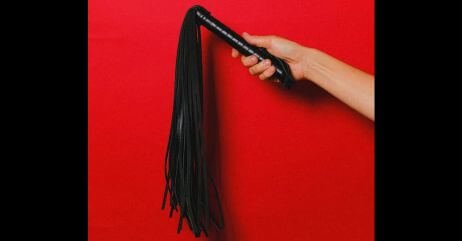
Floggers are bundles of tails attached to a handle, delivering anything from a soft massage to a stinging lash.
Their spread of tails makes them gentler than single-strand tools, and our notes on choosing and throwing a flogger cover technique in detail.
19. Suede Floggers
Suede floggers have soft, wide tails that create a thuddy, comforting sensation ideal for warm-ups and nervous beginners.
They rarely leave marks at gentle force, and the rhythm can feel almost meditative for the receiver.
20. Leather Floggers
Leather floggers range from soft, wide-tailed designs to stiff, narrow ones that sting sharply.
More tails and wider strips feel thuddier, while fewer, thinner tails concentrate force and sting more.
Leather floggers suit partners ready to move beyond suede without jumping straight to canes or whips.
21. Rubber Floggers
Rubber floggers have dense, heavy tails that deliver a sharp, biting sting and leave marks easily.
They are non-porous and simple to clean, but their weight means beginners should swing them gently and close to the body.
22. Horsehair and Synthetic Floggers
Horsehair floggers have hundreds of fine strands that create a light, tickling sting, especially when dragged slowly across the skin.
Synthetic versions mimic this feel while resisting moisture, which makes them easier to keep hygienic.
Crops and Whips
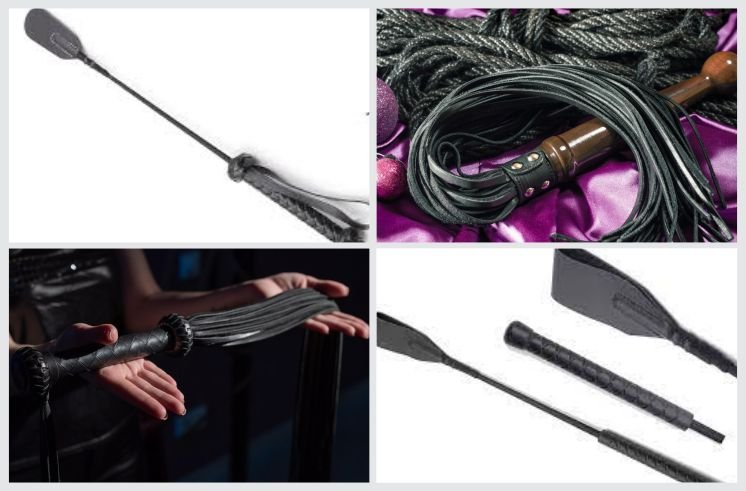
Crops and whips deliver precise, stingy strikes, but they require more control than paddles or floggers.
Beginners can enjoy light crop taps, while whips belong to experienced players who have practiced extensively.
23. Riding Crops
A riding crop has a flexible shaft with a small leather keeper at the tip, ideal for precise, playful taps.
Light flicks feel stingy but manageable, and the crop also works for teasing, pointing, and lifting a partner’s chin.
Our notes on crop techniques and safety explain how to grip and aim.
24. Dressage Whips
Dressage whips are longer, more flexible versions of the crop, without a broad keeper at the tip.
The long shaft builds speed easily and stings sharply, so even gentle swings require careful aim.
25. Signal Whips
Signal whips are short single-tail whips with a stiff braided body and a flexible fall at the end.
They deliver a sharp, cutting sting and can break skin, so learn to throw one on a target before using it on a person.
26. Cat o’ Nine Tails
A cat o’ nine tails has several knotted or braided tails, giving it far more bite than a standard flogger.
Knotted tips concentrate force and mark easily, so this tool suits experienced partners who have discussed marks beforehand.
27. Bullwhips and Snake Whips
Bullwhips and snake whips are long single tails that crack loudly and strike at high speed.
They can cut skin and injure eyes, so only trained players should use them, ideally after hands-on instruction.
Read about single-tail whip safety before you even consider adding one to your collection.
Household Spanking Implements
Ordinary household items have a long history in spanking roleplay, partly because they feel familiar and require no special purchase.
Many carry a playful, nostalgic quality, but some cause more damage than their humble appearance suggests.
28. Hairbrush
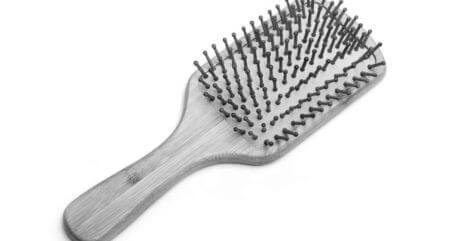
A wooden hairbrush is one of the best-known household spanking tools, thanks to its flat back and solid weight.
The back of the brush delivers a sharp, concentrated sting, while the bristles can scratch, so always strike with the smooth side.
29. Wooden Spoon
A wooden spoon delivers a small, pointed sting with very little effort, making it more intense than it looks.
Spoons can crack along the grain, so inspect them for splits and keep play spoons separate from cooking utensils.
30. Slipper or Flip-Flop
A soft slipper or rubber flip-flop produces a loud slap with moderate sting, suited to lighthearted, humorous scenes.
These are among the safest household options, though hard-soled shoes should never substitute for a soft slipper.
31. Ruler
A wooden or plastic ruler delivers a narrow, stingy strike that falls between a crop and a light cane.
Rulers suit schoolroom roleplay, but cheap plastic rulers snap easily and leave sharp edges.
32. Spanking Bench
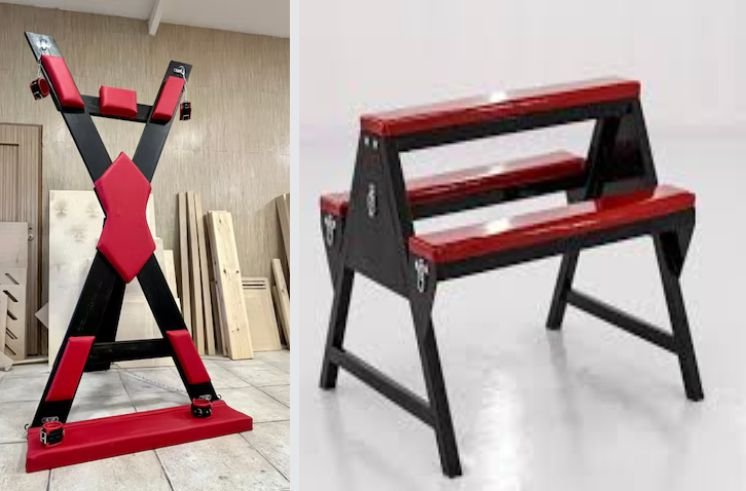
A spanking bench is furniture rather than an implement, but it supports the receiver comfortably for longer scenes with any tool.
Padded kneelers and armrests take strain off joints, much like the benches and bondage tables found in a fully equipped dungeon.
Spanking Tool Materials Compared
Material decides how a tool feels, how long it lasts, and how thoroughly it can be cleaned between partners.
| Material | Feel | Porous? | Cleaning |
|---|---|---|---|
| Leather | Thud to moderate sting | Yes | Wipe with leather cleaner, condition regularly |
| Suede | Soft thud | Yes | Spot clean only, air dry |
| Wood | Heavy thud, deep impact | Yes, unless sealed | Wipe with mild soap, dry immediately |
| Silicone | Snappy sting | No | Soap and warm water, toy cleaner |
| Rubber | Intense, lingering snap | Varies | Mild soap, avoid oils |
| Acrylic and polycarbonate | Sharp slap | No | Soap, water, or disinfectant |
| Rattan and bamboo | Sharp, linear sting | Yes | Wipe gently, replace if cracked |
| Delrin | Deep, intense sting | No | Soap, water, or disinfectant |
How to Choose the Right Spanking Tool
Sam and Aisha learned that choosing a tool is mostly about matching sensation to experience, not picking the scariest item in the shop.
These six questions help you narrow down a sensible first or next purchase.
- What sensation do you both want? Choose thuddy tools for deep warmth and stingy tools for sharp, bright sensation.
- How experienced are you? Start with hands, leather, silicone, and suede, then progress gradually toward wood, straps, and canes.
- Are marks acceptable? Canes, studded paddles, and whips mark easily, so agree on visible marks first.
- How much noise matters? Slappers and acrylic paddles crack loudly, which matters in shared homes and thin-walled apartments.
- Do you need discretion? Hairbrushes and wooden spoons hide in plain sight, while floggers and canes are harder to explain.
- Will you share tools? Non-porous materials suit partners who play with others or attend clubs.
Quality matters more than quantity, since well-made tools have smooth edges, sturdy handles, and secure stitching.
Homemade implements can work, but the trade-offs are covered in buying versus making gear.
Talk through limits on marks, intensity, and tools before any purchase, using agreeing limits on marks as a starting checklist.
Using Spanking Tools Safely
Most implements deliver more force than a hand, so a few simple habits prevent most injuries.
Remember that spanking is part of a broader, consensual practice, and what BDSM actually involves puts these tools in context.
- Warm up by hand first: Several minutes of hand spanking prepares the skin and lowers the risk of sudden bruising.
- Test on yourself: Strike your own thigh with each new tool so you feel its weight before using it on a partner.
- Aim for padded areas: Keep strikes on the fleshy lower buttocks and upper thighs, avoiding the tailbone, kidneys, and spine.
- Watch for wrapping: Straps, floggers, and whips can curl around onto the hips, so adjust distance and angle.
- Build gradually: Increase force slowly, and drop back to a softer tool when the receiver’s skin looks angry or blotchy.
- Check in regularly: Agree on safe words that work mid-scene, plus a simple number scale for intensity.
Bruises are a real risk with dense tools, and MedlinePlus explains bruise healing, noting that most bruises fade completely within about two weeks.
Stop immediately if you see broken skin, deep purple bruising, swelling, or numbness, and seek medical care for anything that worsens.
Cleaning and Caring for Spanking Tools
Cleaning matters most when a tool has touched broken skin, bodily fluids, or more than one partner.
Hepatitis B can survive on environmental surfaces for at least seven days, according to Canada’s public health agency.
Cleaning alone may not remove everything immediately, as Columbia’s Go Ask Alice describes a study where nearly half of cleaned vibrators still carried HPV.
After 24 hours, none of the silicone toys in that study tested positive, while 30% of the thermoplastic ones still did.
- Non-porous tools: Wash silicone, acrylic, and Delrin with soap and warm water, then use a toy-safe disinfectant if skin was broken.
- Leather: Wipe with a damp cloth and leather cleaner, dry naturally, and condition every few months to prevent cracking.
- Wood: Wipe with mild soap, dry immediately, and sand or replace any tool that develops splinters.
- Canes: Inspect rattan and bamboo before every use, and discard anything split or frayed.
- Storage: Keep tools dry, out of direct sunlight, and away from children, ideally in a breathable bag or box.
Any porous tool that has drawn blood should stay with one partner only, because leather, wood, and rattan cannot be fully sanitized.
Aftercare matters as much as cleaning, and caring for welts afterward covers both skin and emotional recovery.
Conclusion
Sam and Aisha retired the oak paddle to a high shelf and rebuilt their kit around hands, leather, silicone, and suede.
Their next scenes felt warm, playful, and safe, because each new tool arrived after they had tested it together.
Start with forgiving implements, warm up by hand, and agree on marks before anything dense or stingy appears.
Clean every tool carefully after each scene and replace anything cracked or splintered.
When you feel ready for something new, read a deeper look at floggers and choose your next tool together.
Frequently Asked Questions
What is the best spanking tool for beginners?
Your hands come first, followed by a leather or silicone paddle and a suede flogger. These tools spread force, mark rarely, and teach control before anything heavier arrives.
What is the difference between thud and sting?
Thuddy tools spread force across a wide area, creating deep, heavy sensation. Stingy tools concentrate force on a narrow strip, producing sharp, surface-level pain that warms skin quickly.
Are canes safe for beginners?
Canes are poor beginner tools because they concentrate force into one line and raise welts fast. Practice accuracy on a pillow first, then start with very light taps.
How do you clean a leather spanking paddle?
Wipe it with a damp cloth and leather cleaner, air dry, and condition every few months. Never soak leather, and retire any paddle that has ever drawn blood.
Disclaimer: This article is for educational and informational purposes only and does not constitute medical, psychological, or therapeutic advice. All content assumes and is intended for consenting adults (18+). This site does not endorse or provide instruction for any non-consensual activity, or any content involving minors. If you are exploring kink, BDSM, or fetish practices, consult reputable educational resources and, where relevant, a licensed sex therapist or medical professional. If you are in crisis or experiencing abuse, contact appropriate local support services immediately.

Morgan Ellis is the author and researcher behind Kink: BDSM and Fetish Chronicles. With years of study into the psychology, research, and lived experience of alternative sexuality, Morgan writes about kink, BDSM, and fetish from an educational, judgment-free perspective — grounded in consent, communication, and safety. Every article on this site reflects a commitment to honest, responsible information for curious and experienced adults alike.